

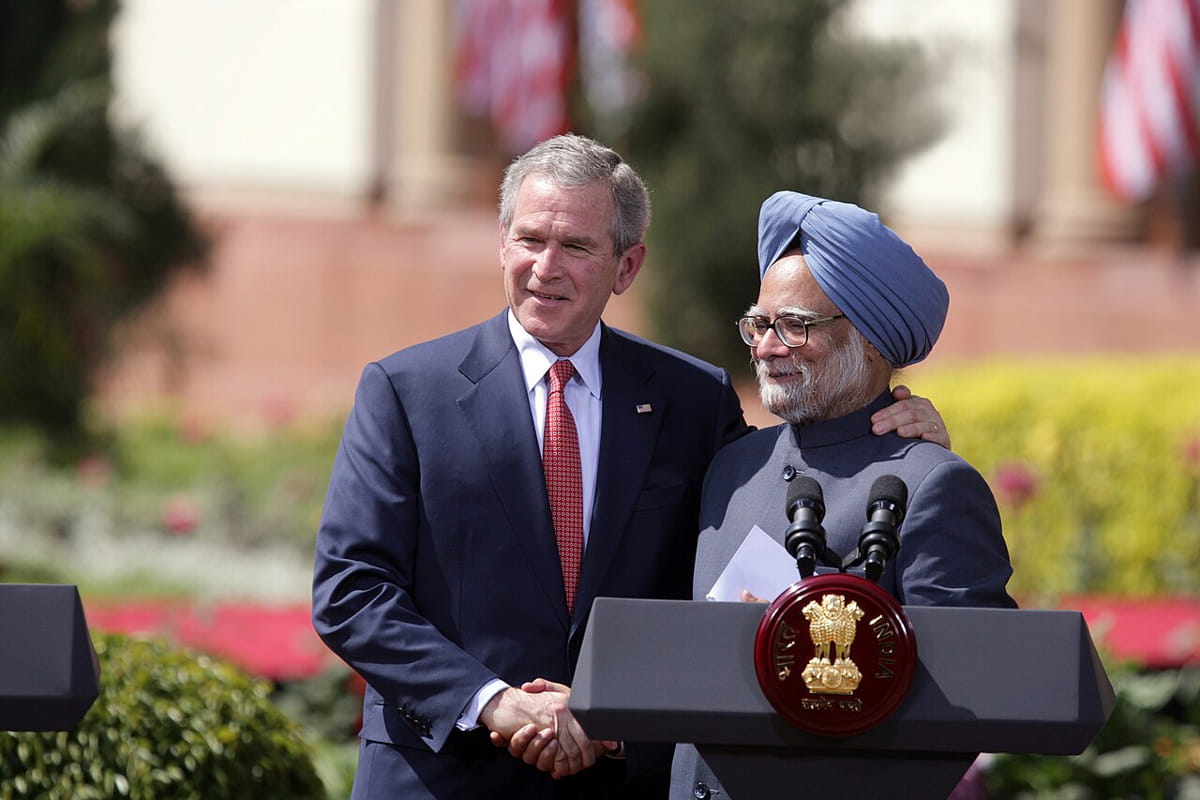
Indian Prime Minister Manmohan Singh with the US President, George Bush in New Delhi on March 2, 2006. | White House/Paul Morse
India has gone further by insisting that a mulitpolar world order must include a multipolar Asia. In other words, India does not accept a hierarchial order in Asia dominated by China, in which it would be a junior player. This is a clear example of India's strategic autonomy principle. Strategic autonomy has imparted a remarkable consistency to India's foreign policy.
Origin of the Term ‘Strategic Autonomy’
In July 2005, India and the US announced that they would negotiate a Civil Nuclear Cooperation Agreement that would enable India to gain access to the international civil nuclear energy market without having to limit, in any way, its nuclear deterrent. It is important to appreciate that this landmark development was taking place in the context of a growing strategic convergence between India and the US.
This convergence included a common interest in meeting the challenge posed by China’s emergence as a front-ranking economic and military power. It was important for India to convey that this did not mean that it would align itself with the US on every issue. There would be issues on which the two countries could be partners, and there would be issues on which they would have different perspectives and adopt different postures.
At that time, for example, India was engaging constructively with the military regime in Myanmar, whereas US policy was to isolate and sanction the regime. The two countries also had differing views on the role of Pakistan and the situation in Afghanistan. On Nepal, India was promoting a political understanding between the country’s mainstream political parties and the Maoists, while the US regarded the latter as a terrorist group. On matters relating to the subcontinent, India insisted on taking the lead.
It was in this context that the concept of “strategic autonomy” was introduced to convey that the proposed nuclear deal—a major departure in India–US relations—did not, in any way, limit India’s foreign policy options. As India’s Foreign Secretary from 2004 to 2006, I used this term for the first time while speaking to a US think tank delegation at the Observer Research Foundation, probably at the end of 2005 or the beginning of 2006.
I was asked whether I was conveying that India still adhered to the policy of non-alignment. I explained that, during a certain historical period, non-alignment was the instrument through which India pursued strategic autonomy. In the current historical period, India was aligned with several partners on issues of convergent interest, and therefore non-alignment could become a more limiting concept.
Strategic autonomy was the more fundamental and consistent underpinning of India’s foreign policy since it emerged as an independent country in 1947. It is this underlying principle that explains the various foreign policy choices India has made in different periods and on different issues. Since its first articulation during my tenure as Foreign Secretary, the term has gradually become part of India’s foreign policy lexicon.
In 2012, Harsh Pant of the Observer Research Foundation recognized this pedigree of the term:
“The term strategic autonomy was first formally articulated by the Indian foreign policy establishment during the tenure of Foreign Secretary Shyam Saran from 2004 to 2006. It became the guiding principle for the Indian side during the negotiations of the India–US Civil Nuclear Agreement and was used to describe India’s independent decision-making capability despite strengthening ties with the US”.[1]
This is exactly right.
Defining Strategic Autonomy
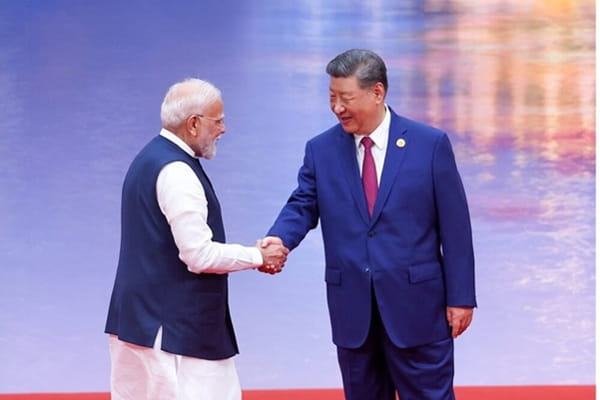
Indian Prime Minister Narendra Modi meets President of China, Xi Jinping during Official Reception for Heads of States/Heads of Governments at SCO Summit at Tianjin, in China on August 31, 2025. | PIB.
How should one define the term “strategic autonomy"? It is best understood as the capacity of a state to take relatively autonomous decisions on matters of vital interest to the state. The element of relativity is important. Not all interests are of a vital nature, and in a multi-state landscape, one cannot ascribe absolute value to every interest. If one did so, there would be no space for diplomacy. On different issues, in different time periods and situations, the calculus will differ.
In the negotiations on the nuclear deal with the US, there were red lines India was not prepared to cross. It would not accept any limitation on its right to pursue the further development of its nuclear weapons arsenal or to cap its size.
This was clearly a vital interest. However, India accepted the need to separate nuclear facilities that were exclusively related to the nuclear weapons domain from those that were entirely civilian in nature. Only the latter would benefit from international civil nuclear cooperation under India-specific international safeguards.
Strategic autonomy was best pursued through a policy of non-alignment during the Cold War and the East–West confrontation. Having won the extended struggle against colonial rule, a newly independent India was not willing to accept a new form of political subordination as a junior ally in a military alliance system headed by one or the other superpower. There has been a continuing popular consensus that never again should the destiny of the people of India be determined in a foreign capital.
With the end of the Cold War, the pursuit of strategic autonomy did not become invalid. The changed international geopolitical situation and the transformation of India into a more substantial economic and military power made a different articulation of strategic autonomy both possible and necessary. Non-alignment had elements of defensiveness because of the limitations of power faced by early independent India.
Today, the emergence of India as a front-ranking economic, technological, and military power has imparted greater confidence to its pursuit of strategic autonomy. India now has greater agency and the ability to play a larger role in shaping a new international order. India’s foreign policy today may be described as independent, multi-aligned, or as working through issue-based coalitions.
Yet the guiding star remains the upholding of strategic autonomy. For example, both India and China have expressed a preference for a multipolar world order. However, India has gone further by insisting that a multipolar world order must include a multipolar Asia. In other words, India does not accept a hierarchical order in Asia dominated by China, in which it would be a junior player. This is a clear example of India’s strategic autonomy principle. Strategic autonomy has imparted a remarkable consistency to India’s foreign policy.
Conclusion
Every incoming government seeks to convey that it has brought major departures in foreign policy that distinguish it from its predecessors. While the articulation may change, the essence of strategic autonomy remains constant. It draws inspiration from the country’s civilizational identity, its geographical location, its history and culture, and, above all, the sensibilities of its people.
(Exclusive to NatStrat)
Endnotes

Separating Reality from the Rhetoric: Facts, Fiction, and the Indus Waters Treaty