

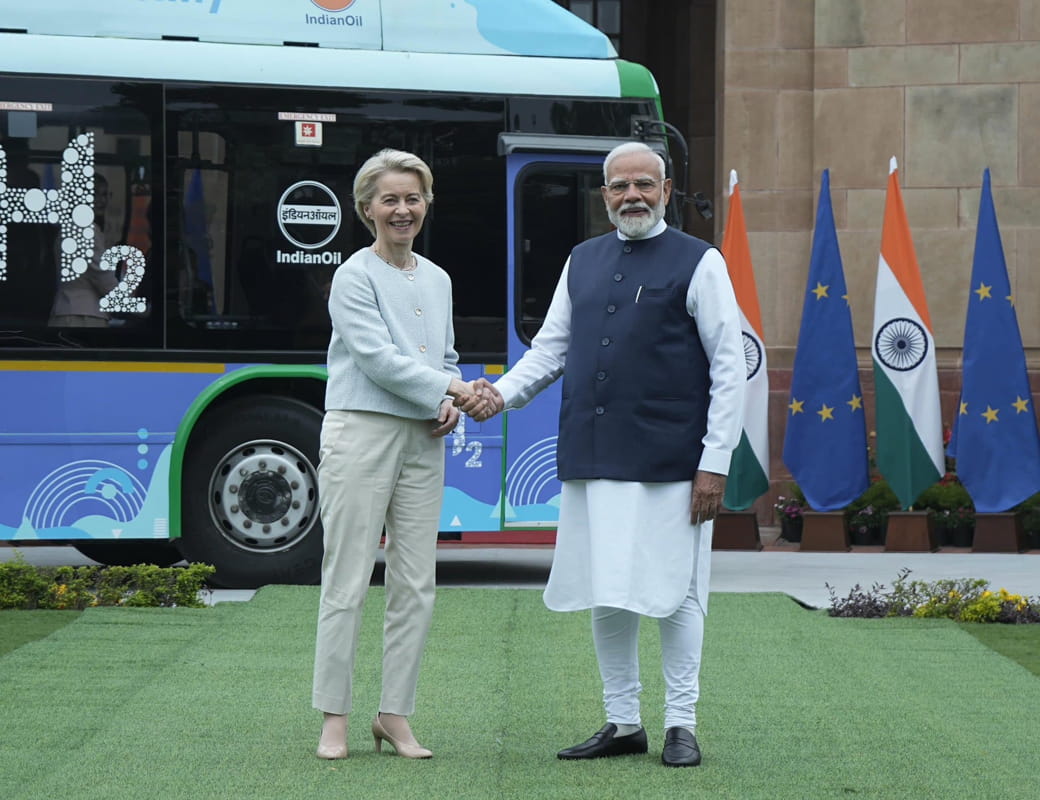
India’s Prime Minister Narendra Modi welcomes President of the European Commission, Ursula Von Der Leyen, at Hyderabad House in New Delhi on February 28, 2025. | IANS/Qamar Sibtain.
India has the most important ingredients for strategic autonomy – national will and historical experience. These are being reinforced by the accumulation of material attributes of power. India’s strategic autonomy is an imperative not just as a risk-mitigation strategy through a turbulent global transition but also to be a major force in shaping the global future.
Introduction
An independent economic, foreign and security policy should be axiomatic for a free nation. It should, thus, make the proposition of strategic autonomy as a considered policy choice irrelevant. That, however, is not the reality for most nations in an era of fixed alliances and weak dependencies, where nations seek security and economic benefits through at least a partial surrender of sovereignty in decision-making to a more powerful country or a group of nations. This choice has run throughout the course of history, but, perhaps, at no time on such a global scale and reach as in the Cold War period and beyond.
Strategic autonomy reflects a combination of internal decisions and external strategy that best advances a country’s national interests without allowing the choice to be dictated by external actors. It entails a capacity to withstand external pressure as much as the will to assert one’s interest or position. Strategic autonomy does not imply autarky, isolationism, individualism or disregard of external sensitivities or commitments.
It does not preclude partnerships or alignments, or even a varying degree of trade-off between independence and alliance in different situations. This implies that strategic autonomy is not defined by rigid parameters or applies equally in all situations. A country may exercise autonomy in balancing major powers, but may see gains in embedding itself in a trading bloc. Singapore, for example, maintains strong relations with the US and China but also acts in accordance with the ASEAN consensus. France is a member of NATO and the EU but seeks to maintain, albeit with declining ability, strategic autonomy as the central pillar of its policy.
India’s size, scale, geography, economic circumstances and security challenges; the civilisational ethos and the moral foundation of the freedom movement; domestic political traditions; and the self-conception of its place and role in the world put it on the hard but inevitable path of independence in external choices. There were several moments in independent India’s journey where the country asserted its will, sometimes standing alone, against the world in pursuit of its interests: from nuclear capabilities to multilateral negotiations.
India’s path of non-alignment provided a shield against the binary choices of the Cold War bipolar world and a force multiplier in global affairs. Nonetheless, non-alignment imposed its own constraints. Further, economic and security vulnerabilities, estrangement with the United States, deepening dependence on the Soviet Union, and the twin neighbouring challenges of Pakistan and China circumscribed India’s choices on occasions.
In the post-Cold War era, India moved deftly to reorient its internal and external economic strategies, transform relations with the United States, sustain the partnership with Russia, improve ties with China (until the beginning of the Xi Jinping era), intensify European engagement, diversify relations with the Gulf and Southeast Asia as near neighbours and expand presence in Africa.
It joined multiple global forums, minilaterals and regional organisations, some with conflicting agendas and interests.
India was able to pursue the so-called multi-alignment with strategic autonomy because of the historical rejection of bloc politics; handling of relationships on merit, with consistency and transparency; and refusal to take sides in rivalries and conflicts, or to become an instrument in the strategies of major powers. It drew strength and confidence from a new global attention to its growing economic attractiveness and rising international stature.
India also benefited from a conducive geopolitical space at a time when the trans-Atlantic partnership was cohesive and dominant, the relations between Russia and the West were not so fraught, China was still not a major power, and the US was invested in the economic benefits of China’s rise, and a West-driven multilateral system still carried belief in its salience.
India’s Strategic Autonomy Under Stress
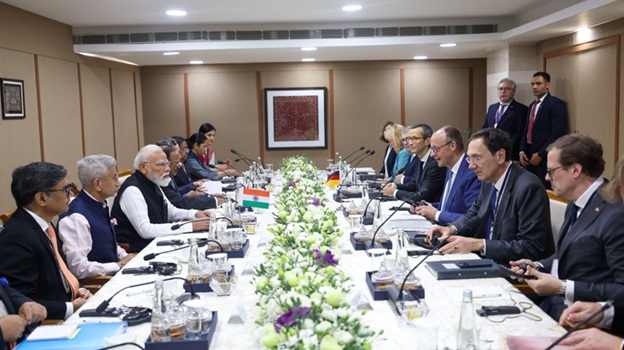
Indian delegation led by Prime Minister Narendra Modi interacts with German delegation led by Federal Chancellor of the Federal Republic of Germany, Friedrich Merz in Gandhinagar on January 12, 2026. | MEA.
That geopolitical space is shrinking in a changed world. During the past few years, India’s strategic autonomy came under stress. India accelerated the deepening of its strategic partnership with the United States. At the same time, relations with China worsened. This, in turn, increased India’s strategic tilt towards the United States, which led, among other things, to the perception of the Quad as the central pillar of India’s security strategy in the Indo-Pacific region. It raised US expectations of the partnership turning into an alliance or being amenable to US preferences. Challenges from China ran the risk of creating a new vulnerability for the US.
This also made shielding relations with Russia at a time of conflict between Russia and the West more complex. Weaponisation of trade, technology, finance and energy by the West added to the dilemma precisely when our external economic engagement became an essential strand of national transformation. The deeply embedded Indian political tradition of strategic autonomy resisted pressure and promises to navigate through this moment of challenge and temptations.
President Trump’s decisions and declarations have applied breaks on, if not put in reverse gear, the twenty-five years of transformation in India-US relations. But that is part of a more sweeping reset in US policy, goals, and strategy that has sharpened a trend that has been in the making for over a decade across successive US Administrations.
The US retreat from the international order that it led in creating but no longer finds useful or attractive, and its growing unilateral use of power, is not just a source of disruption, but also a reflection of a response to internal weaknesses and deeper global structural changes involving global power shifts; ossified and weakened international institutions; use of force replacing rule of law; fracturing alliances and emerging new equations; increasing political trade, technological, digital and financial fragmentation; rising inequalities that are influencing internal politics and external choices; a shift from globalism to protectionism, universalism to nationalism; and transformative power and perils of AI technology.
The emerging distribution of power and shape of the world is uncertain. On the metrics of economic, digital, and military power, some expect the future to be a bipolar one between the US and China, or one in which Russia, too, may continue to exercise coercive will. But the most likely future will be a multipolar one, evident even in its implicit acceptance by President Trump. It will be a world not just of multiple powers, but also of multiple systems, political structures, cultures, and worldviews, without a fixed, predictable pattern of engagement and the coordinating and stabilising power of an effective multilateral system. The future may range from sharper geopolitical fault lines to an uneasy equilibrium and spheres of influence.
Strategic Autonomy in Action
India’s strategic autonomy will make it easier for India to adapt to, shape and benefit from an amorphous and unpredictable multipolar world. The global environment will be more challenging, but political stability and continuity, internal cohesion and growing economic, technological, military and convening power give India greater capacity to exercise strategic autonomy.
This has been evident in two major national security and foreign policy choices in 2025. The first was India’s punitive military operation inside Pakistan after the Pahalgam terrorist attack in April 2025. The second has been a swift move to rebalance ties with major powers after President Trump’s disruptive measures. India is renegotiating the terms of its engagement with the United States without caving into pressure and by insisting on the fundamental premise of a sui generis relationship of partnership, not an alliance, between two sovereign nations.
India is reinvigorating its longstanding strategic partnership with Russia and has moved with caution to ease tensions, normalise relations, and explore opportunities with China. It has turned with deeper interest to a beleaguered Europe, itself seeking to adjust to the transatlantic rupture, Russian and Chinese pressure, and declining competitiveness. Europe lacks strategic heft, but will be a key source of India’s economic, technological and military self-reliance. India’s policy cannot be framed as an “either-or” choice, but one that manages to establish the right balance of engagement.
Future Pathway
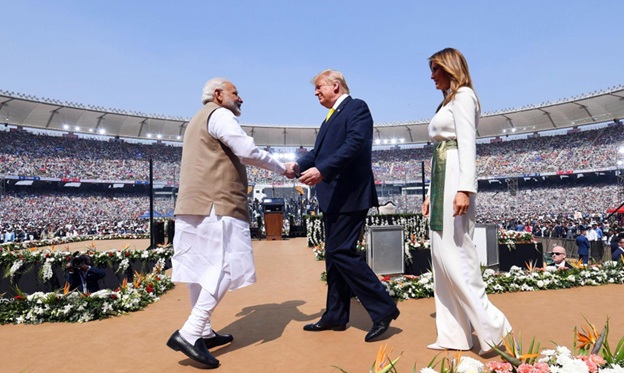
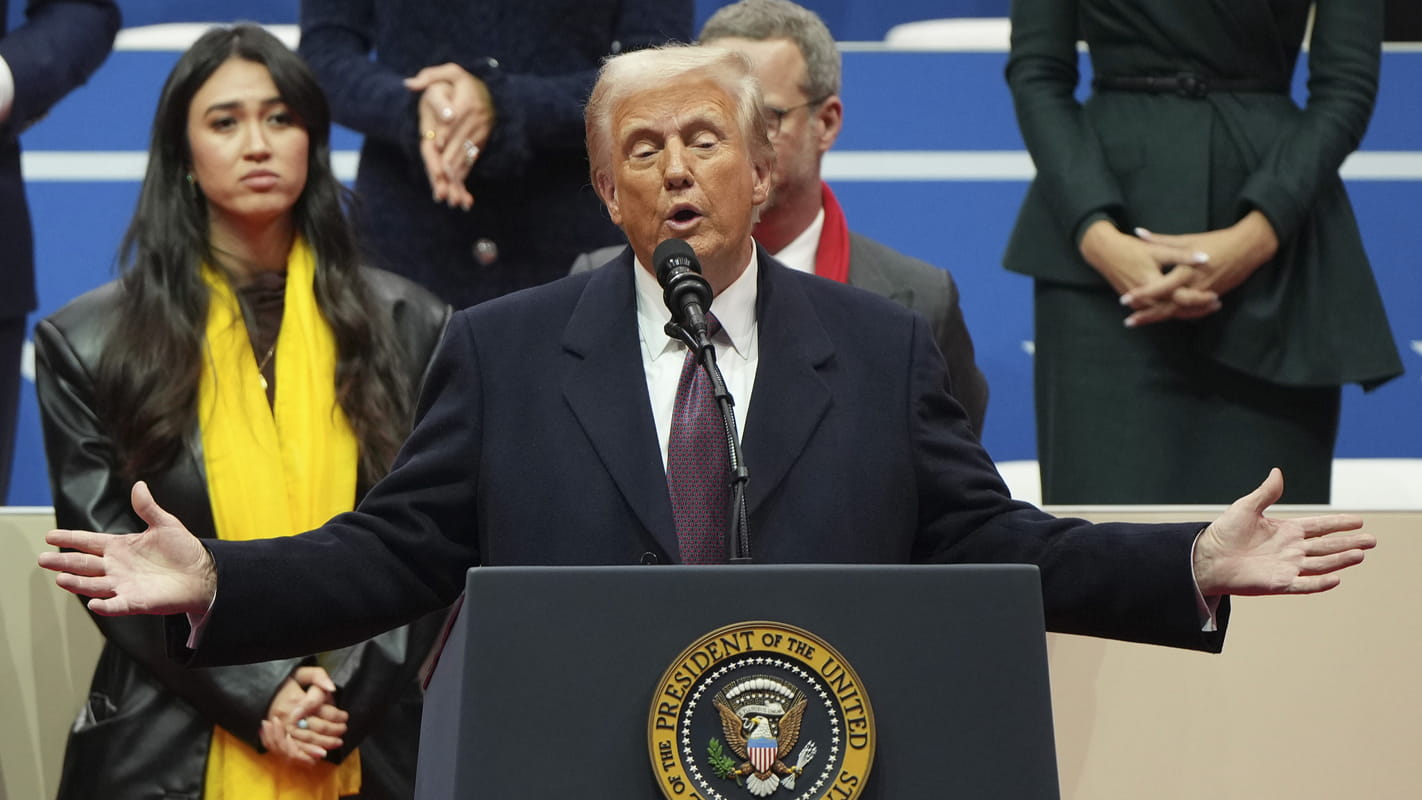
Indian Prime Minister Narendra Modi greets the President of the US, Donald Trump and the First Lady of the US, Melania Trump at Motera Stadium in Ahmedabad on February 24, 2020. | MEA
But that will not be enough. India must find a way to address the challenges from Pakistan and an increasingly powerful China. Both weigh heavily on our foreign policy and national security and have an impact on our ability to exercise strategic autonomy. Bold and imaginative diplomatic initiatives may be needed, but these will deliver only if there is intent on the other side, too. Meanwhile, India must continue to reinforce other instruments to strengthen its resilience for independent choices.
India will have to do more to secure its interests and influence in South Asia, intensify engagement with Southeast Asia, adjust its strategy to the fast-changing dynamics of the Gulf and West Asia, establish primacy in the Indian Ocean Region, and continue the process of expanding ties in Africa and Asia. India must not just speak but also deliver for the Global South. India must have its own sphere of influence.
This will strengthen its hand in dealing with major powers. The uncertainty about the nature of future US presence and guarantees in the Indo-Pacific as a “public good” also necessitates engagement with Japan, the ROK, and Australia outside US-led groupings.
Multilateralism enhances the space for the exercise of strategic autonomy. For all the pessimism around it, India must persist with efforts to reform and revive multilateral institutions. Further, creating coalitions around specific challenges with a spirit of multilateralism, as India has done with initiatives like the International Solar Alliance, will bolster our complex, overlapping pattern of relationships and expand our international influence. That also applies to the increasing salience of groupings and minilaterals. India has done well to be present in diverse groupings and minilaterals, from the global to extended maritime and continental neighbourhood, some with contradictory and competing objectives.
Trade and investment strategy will play a key role. As the trade regime is shifting from multilateral to regional and bilateral arrangements, India is pursuing Free Trade Agreements (FTAs) and the Comprehensive Economic Cooperation Agreement (CECA)/Comprehensive Economic Partnership Agreements (CEPAs) with renewed vigour and confidence, aligning trade agreements with geopolitical priorities and the quest for diversification. These include recent ones with the European Free Trade Association (EFTA), the UK, Australia, the UAE and Mauritius; revisions to existing ones and more than ten ongoing or planned negotiations, including with the EU, the USA, and the Eurasian Economic Union.
Further, the quality, scope and coverage of FTAs have increased significantly. That is essential to expand exports and investments, but also to diversify markets, create resilient supply chains and integrate more into global value-chains, which constitute the dominant share of global trade. A calibrated opening with China is required in view of its domination of the supply chain, including for the critical bottleneck products.
External engagement must continue to place priority on assured access to critical minerals, energy, technology, and the building blocks of the new age – semiconductors and AI. This is evident in the priorities and initiatives agreed with key global partners. India must also examine alternative cross-border payment channels and mechanisms, including the internationalisation of UPI as a remittance channel and the possibility of using alternative forms of digital tokens for trade transactions.
The strongest foundation of strategic autonomy will not just be India’s national will, but also its national capacity. This will require:
❖ Sustained, rapid and inclusive growth with macroeconomic stability and self-reliance or Atmanirbharta.
❖ Rapid industrialisation, with high technological capabilities, especially in the industries of the future.
❖ Boosting domestic demand.
❖ Energy security and independence through renewables and nuclear energy.
❖ Digital sovereignty.
❖ Resilient supply chains.
❖ Defence self-reliance and readiness.
India needs massive reforms for rapid defence industrialisation, which must go beyond the assembly of imported platforms. Indigenous capabilities in design, development, metallurgy, advanced electronics and software, testing, qualification, and certification are essential, as much in platforms as in components, weapons, sensors, data fusion and communication. That also applies to new domains of cyber, space, the underwater and the seabed. Maintaining a credible nuclear deterrence posture and will is the ultimate guarantor of national sovereignty and strategic autonomy.
India has the most important ingredients for strategic autonomy – national will and historical experience. These are being reinforced by the accumulation of material attributes of power. India’s strategic autonomy is an imperative not just as a risk-mitigation strategy through a turbulent global transition but also to be a major force in shaping the global future.
(Exclusive to NatStrat)
Separating Reality from the Rhetoric: Facts, Fiction, and the Indus Waters Treaty