

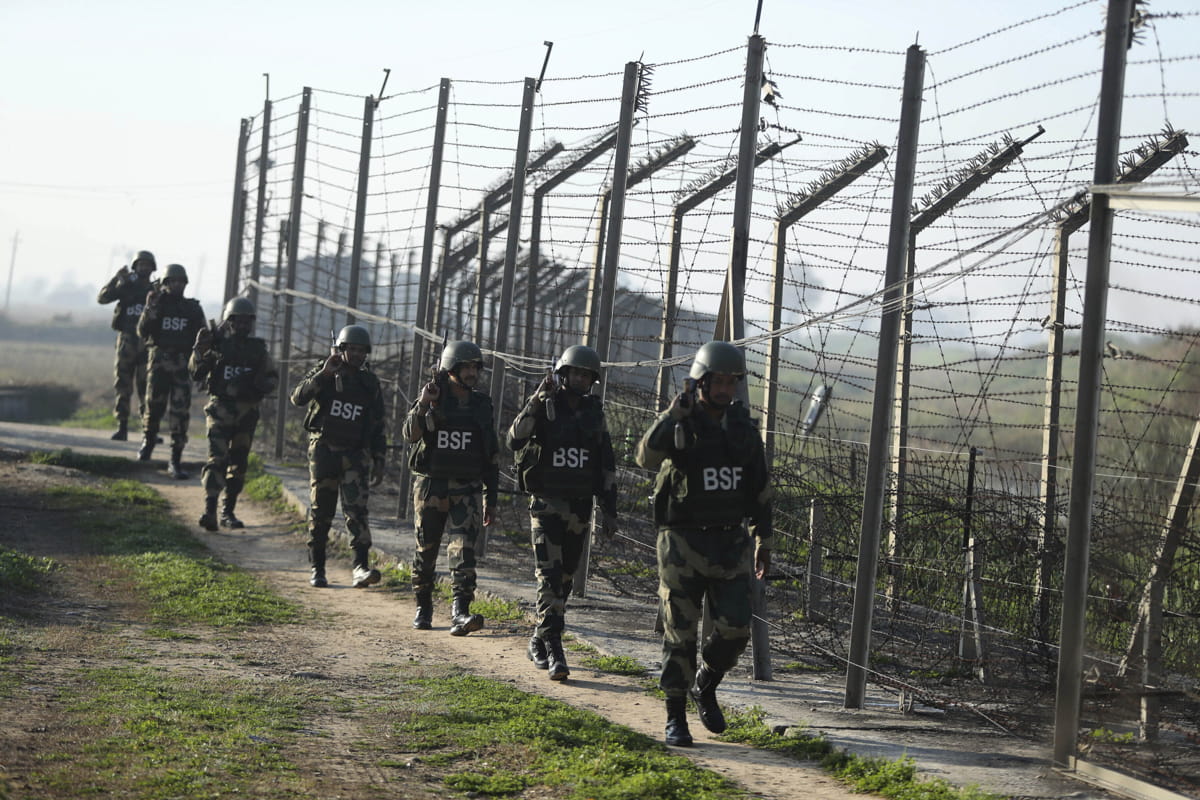
India’s Border Security Force (BSF) out on patrol. | The North-East Affairs.
The focus on Bangladeshi and Burmese migration is motivated by scale and controversy. Illegal immigration from Bangladesh has been a decade-long issue, especially in the state of Assam, while the crisis in Myanmar has sent refugees from Rakhine State into Northeast India, often via Bangladesh. On narcotics, Myanmar has historically been a source of opium and the post-coup chaos has accelerated the production and distribution of synthetic drugs.1
Introduction
Northeast India, comprising eight states, is a culturally and ethnically diverse region characterised by its unique geo-strategic location. It covers nearly eight per cent of the country’s total geographical area and nearly four per cent of the population. The security of India’s Northeast is shaped not only by traditional military concerns but also increasingly by non-traditional threats such as the influx of illegal immigrants and refugees, transnational crime, and environmental degradation, posing complex challenges to the region’s security, stability and development. In recent years, illegal immigration from neighbouring Bangladesh and Myanmar and drug trafficking from the Golden Triangle (Myanmar-Laos-Thailand) have become major challenges for the region. These issues fused with internal insurgencies, ethnic tensions and social unrest further complicates the security landscape in the region.
Although the Northeast is affected by a wide array of non-traditional threats, this paper focuses on illegal cross-border migration and narcotics flows as they directly imperil regional stability and have drawn national attention.
The focus on Bangladeshi and Burmese migration is motivated by scale and controversy. Illegal immigration from Bangladesh has been a decade-long issue, especially in the state of Assam, while the crisis in Myanmar has sent refugees from Rakhine State into Northeast India, often via Bangladesh. On narcotics, Myanmar has historically been a source of opium and the post-coup chaos has accelerated the production and distribution of synthetic drugs.1
This paper thus discusses the underlying causes - geography, ethnic and demographic complexity and underdevelopment - and describes the threats in detail - offering a tiered set of solutions.
Structural Vulnerabilities of the Northeast
Northeast India’s susceptibility to illegal immigration and drug trafficking stems from several interlinked factors - geography and porous borders, ethnic and demographic complexity, and underdevelopment and poor infrastructure.
Geography and Porous Borders
Northeast shares 5,484 kilometres of international border with Bhutan, China, Myanmar, and Bangladesh making it India’s most externally exposed region. It is connected with the mainland through the Chicken’s Neck, a 22-kilometre narrow corridor limiting easy access and integration with the mainland.
The international borders, particularly the 1,800-kilometre frontier with Bangladesh (across Assam, Meghalaya, Tripura and Mizoram) and the 1,643-kilometre stretch with Myanmar (Arunachal Pradesh, Nagaland, Manipur and Mizoram), cut through densely-forested hills, river valleys and sparsely-monitored terrain 2. Many of these areas are inhabited and cultivated right up to the borderline, and some cross-border communities have strong ethnic and familial ties. These geographic conditions, compounded by insufficient border infrastructure and administrative oversight, allow for widespread unregulated cross-border activity.
Ethnic and Demographic Complexity
Northeast India is home to over 200 distinct ethnic groups and languages. Tribal identities are closely tied to land and culture, creating anxiety over demographic changes.
In Assam the influx of Bangladeshi Hindu and Muslim immigrants have created a deep sense of insecurity in the minds of the common public leading to frequent conflicts and social unrest. The Assam Movement (1979-85) led by the All-Assam Students Union (AASU), which led to the Assam Accord (1985), sought a cut-off for citizenship, reflecting historical fears of Bangladeshi Muslims settling in large numbers 3.
Similarly, Mizoram’s population shares kinship with Burmese Chins. Manipur’s Kuki-Zo community live on both sides of the India-Myanmar frontier. This ethnic mosaic means that any influx, even of co-ethnics, triggers social and political backlash. In Mizoram, the influential Young Mizo Association has repeatedly pressured Chin refugees to repatriate 4. Thus, the region’s diversity and separatist histories make it sensitive to any new migration or illicit influence.
Underdevelopment and Poor Infrastructure
The Northeast states have widely been recognised for their weak economy and underdevelopment. Due to this economic backwardness and lack of infrastructural development, most Northeastern states are heavily dependent on the Centre for their political survival.5 Limited economic opportunities result in widespread unemployment and poverty, compounded by rampant corruption, political neglect and inadequate access to quality education and healthcare. This underdevelopment and separatist tendencies forces the youth to turn towards extremist activities and engage in illicit activities 5.
Key Non-Traditional Security Threats in Northeast India
Illegal Immigration
Illegal cross-border migration into Northeast India has a long history and remains a politically-charged issue. The India-Bangladesh border was largely unfenced until recent decades. Historically, economic and political turmoil in Bangladesh (1971 Liberation War) drove millions across. The then Minister of State Kiran Rijiju in Parliament in 2016 had stated that approximately 20 million illegal Bangladeshi immigrants may be residing in India. The National Registration of Citizens (NRC) report released in Assam on 31 August 2019 has identified over 19 lakh illegal immigrants in Assam, out of which approximately seven lakh are Muslims and the rest are non-Muslims. As per the Citizenship (Amendment) Act (CAA), 2019, these non-Muslims would eventually receive Indian citizenship 6. The CAA, implemented in early 2024, fast-tracked citizenship for non-Muslim migrants from Bangladesh, Pakistan and Afghanistan. However, this led to widespread criticism for an promoting anti-Muslim agenda and politicising the issue to generate electoral support.
The influx of illegal immigrants has generated massive demographic and cultural changes in several districts of Assam, especially the border districts of Dhubri, Darrang and Barpeta in Lower Assam. The 2011 census found that the increase in the number of Muslims in Assam was higher than any other Indian state since the previous count in 2001 7. The economic and political survival of these illegal immigrants over the years has been facilitated through dubious documents such as forged voter identification (ID) and ration cards, among others. This has led to the exploitation of government subsidy programmes, including ration items as well as for availing education and healthcare from government schools and clinics 8.
These immigrants have also entered the unorganised workforce, displacing native workers, as the immigrants are prepared to take up jobs for lower wages than the natives. Besides the huge demographic shift, the question of land encroachment by these immigrants has now become a serious threat to the culture and civilisation of Assam. It is reported that the state faced a declining percentage of forest land from 39 per cent in 1951-52 to about 30 per cent in 2015-16 9.
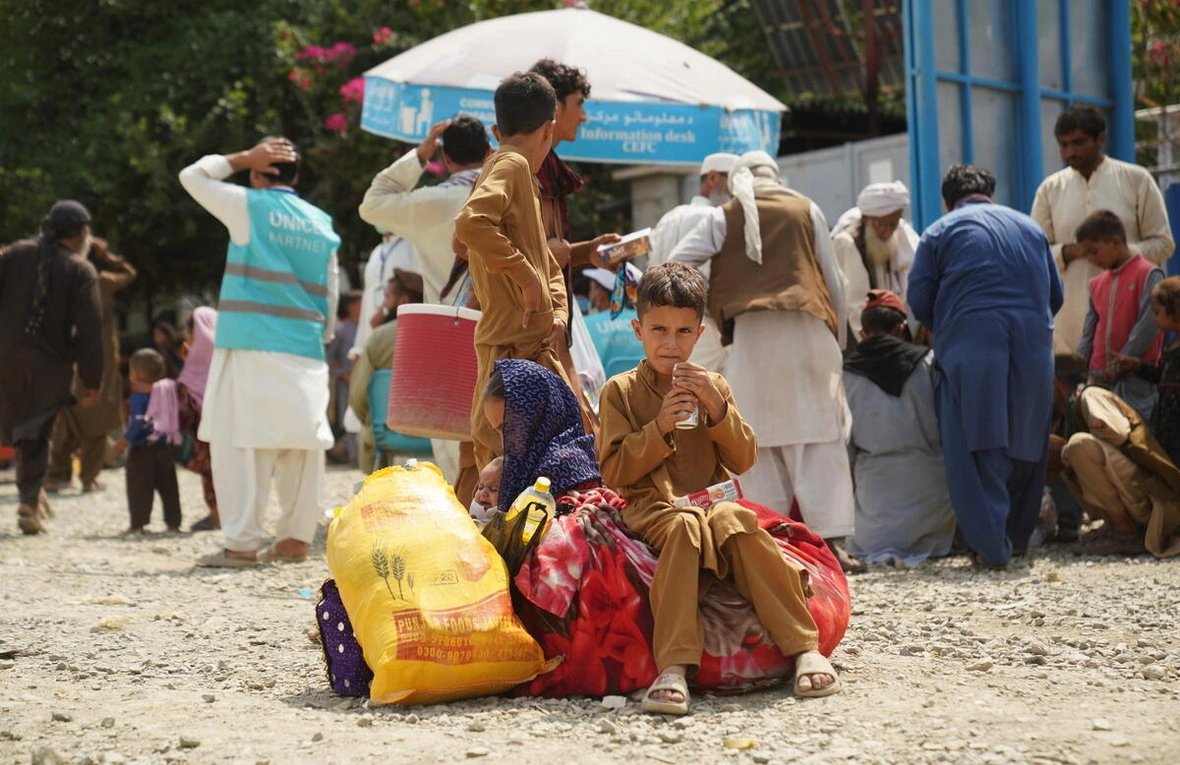
In recent years, an influx of illegal immigrants from Myanmar has added to new challenges. Historically, the ‘Free Movement Regime’ (FMR) allowed villagers to travel on either side for trade and visit. This ambiguous arrangement blurred the line between cross-border kinship and illegal immigration. It is estimated that around 75,000 Rohingya immigrants are currently living in India, of which 54,100 have arrived post the 2021 coup10. They mostly seek refuge in Arunachal Pradesh, Manipur, Mizoram, and Nagaland; however, Manipur’s existing ethnic volatility created fear among the Meitei community of being outnumbered by the refugees since the Kukis shared ethnic lineage with Myanmar’s Chin tribe 11.
In many cases, illegal immigrants, mostly Chins and Rohingya, had procured fake Aadhaar cards through which they obtain PAN and voter cards, driving licences and even open bank accounts 12. The ease in acquiring citizenship and their involvement in illicit activities has fuelled a demand for immediate deportation.
Cross-Border Drug Trafficking
The Golden Triangle (Myanmar-Laos-Thailand) connecting East, South and Southeast Asia has been recognised as the most popular location where opium is cultivated, produced and supplied to the world after synthesising different forms of drugs 13. According to the United Nations Office on Drugs and Crime (UNODC), following the military takeover in Myanmar, there was an increase of about 33 per cent in poppy cultivation in 2022 14. The challenging social and economic environment, including high inflation and political instability, has significantly contributed to this factor. Narcotics smuggling from Myanmar not only includes opium and heroin but also pharmaceutical drugs and ATS which are transported into India’s Northeast, according to the Narcotics Control Bureau’s 2023 Annual Report15. Drugs coming from Thailand and Laos use Myanmar to flood Indian markets through the Northeast.
Therefore, the Northeastern states bordering Myanmar have seen a sharp spike in the flow of narcotics.
Drugs originate from Myanmar’s Shan State and Kachin State, flow to Temu village, and reach Moreh’s Manipur, a major hub for drugs. It then flows to Kohima and Dimapur in Nagaland via Imphal. Other routes include New Somtal village, in Myanmar, to Sugnu and Churanchandpur in Manipur, to Imphal, Kohima and Dimapur, and further transported to Assam 16.
There have been multiple seizures of drugs in the region. For instance, in April 2024, security forces seized heroin worth INR 3.5 crore from Manipur’s border districts. In June 2025, drugs worth INR 100 crore were seized in a joint operation in Manipur and Assam 17.
There has also been a recent trend of poppy cultivation in the Northeastern states, primarily in Manipur and Arunachal Pradesh, bordering the Myanmar states of Kachin, Sagaing Region and Chin State. Ethnic groups of both countries who live in such isolated, mountainous regions call these borderlands home and have similar socio-economic culture, enduring insurgencies and shared culture18. In Arunachal Pradesh, opium cultivation is primarily concentrated in the Anjaw and Lohit districts, whereas in Manipur, it is most prevalent in the Saikul, Ukhrul and Chandel districts. Opium cultivation is a tradition in certain areas in Arunachal Pradesh, whereas in other areas, it is a more recent practice adopted by villagers as a means of livelihood.
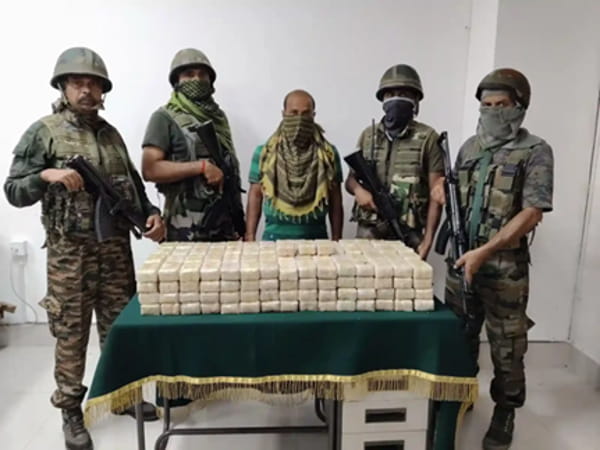
Assam Rifles seizes a major consignment of narcotics in Agartala, August 2025. | News+Police: Police Positive e-News
The nexus between drug trafficking and insurgency in the Northeast is not a new phenomenon. Over the years, insurgent groups in the Northeast have undergone a significant shift in ideology from revolutionary, inspired by Communism - to terrorist-cum-organised crime syndicate - generating finances mainly through extortion, arms and narco-trafficking.
Among other states in the Northeast, Manipur has the maximum number of active insurgent groups, most of which, including the People’s Liberation Army (PLA), United National Liberation Front (UNLF) as well as smaller groups like the Kangleipak Communist Party (KCP) are actively involved in drug trafficking to fund their activities. Nationalist Socialist Council of Nagaland-Isak Muivah (NSCN-IM) and Nationalist Socialist Council of Nagaland Khaplang [NSCN (K)] also reportedly levy taxes on the drug consignments passing through their areas in Nagaland. Other groups like the United Liberation Front of Assam (ULFA) have also set up camps along the Myanmar border to sustain themselves through the funds they receive from drugs as well as arms 19.
Hence, the lucrative nature of the narcotics trade to generate quick money makes it an attractive source of funding for insurgent groups. The deep involvement of insurgent groups in illicit activities has not only prolonged insurgency in the region but has also destabilised border areas and hindered governance, creating a direct national security threat to India.
A Way Forward
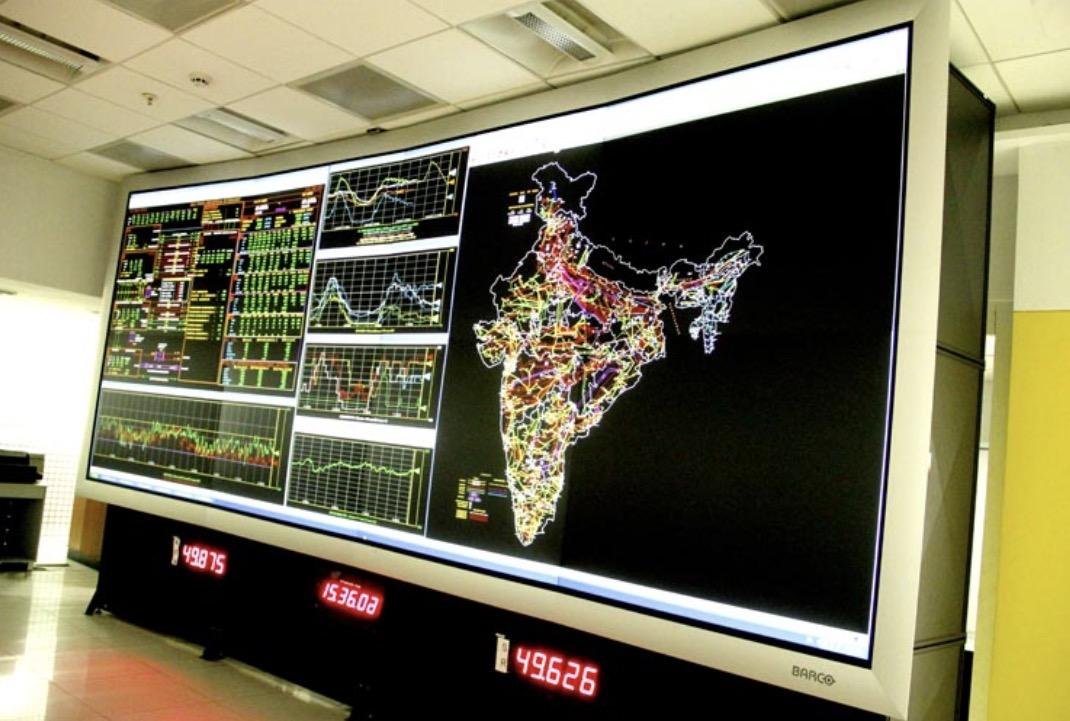
These security challenges continue to persist despite widespread recognition, and progress has been limited. The India-Bangladesh border is 4,096 kilometres, of which 3,196 kilometres has been covered by physical fencing. The government relies on technological solutions for the remaining border. The Border Security Force (BSF) is deployed to check illegal cross-border activities and migration but the difficult terrain creates challenges for the forces. Apart from the patrolling, floodlighting and fencing have been ‘strengthened’ along the Bangladesh border.
In practice, however, smugglers exploit these unfenced gaps and collusion between local officials and migrants. For instance, in a recent operation conducted by the BSF in February 2025, Bangladeshi nationals attempting to cross the border illegally were apprehended, and further investigations revealed the involvement of Indian agents who helped them cross the border illegally 19.
Deportation of illegal immigrants has surged in recent months. Assam Chief Minister Himanta Biswa Sarma said 330 illegal immigrants were pushed back to Bangladesh 20. These efforts highlight the state government’s effort to curb the issue of illegal immigrants. However, the uncooperative attitude of the Bangladesh Government to accept the immigrants is a challenge. Amid the recent crackdown on illegal immigrants, Bangladesh refused entry to individuals on the grounds of insufficient documents, leading to negotiations to resolve the matter 21. On the other hand, the Myanmar junta is too fractured to negotiate meaningfully.
The matter of detection and deportation of illegal nationals/foreigner nationals staying in India are dealt with by the Ministry of Home Affairs. While state governments have been delegated powers for identifying and initiating proceedings against illegal immigrants - including Bangladeshi nationals - their role is largely administrative 22. They lack the authority to carry out actual deportations or negotiate repatriation agreements. This administrative gap often results in political blame games and policy paralysis. Without streamlined coordination between central and state agencies and clear protocols for repatriation, the problem has managed to persist in both scale and complexity.
Possible Solutions
(Exclusive to NatStrat)
Endnotes