

The Kabul River System | Alec Ramirez, Oregon State University

India has traditionally been a friend to Afghanistan, and that relationship carries a responsibility as much as an opportunity. Helping Afghanistan build the storage, irrigation and hydropower capacity it has been denied for so long — through resumed work on Shahtoot, support for the twelve identified storage sites on the Kabul system, and continued investment in transmission and irrigation networks — would do more than address a humanitarian and developmental need. Furthermore, such support would give Afghanistan the negotiating footing it currently lacks to eventually reach a fair, data-based water-sharing arrangement with Pakistan, rather than one dictated entirely by the notion of ‘who built first’. India should come forward, as a good neighbour and a long-standing partner, and lend its expertise and resources to help Afghanistan finally develop the water resources that have, for a century, flowed past it unutilised.
Introduction- The Paradox of Afghanistan
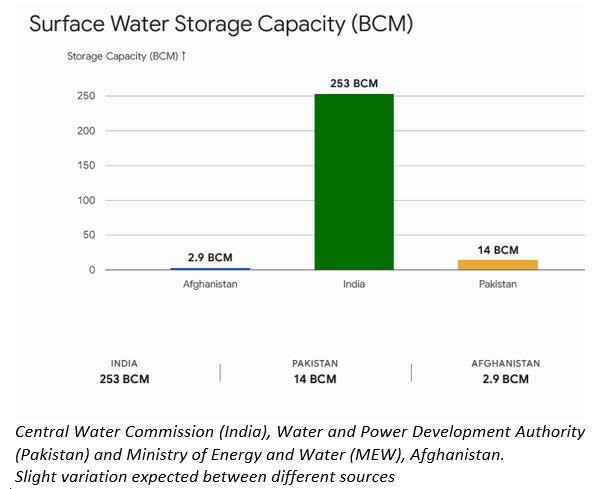
Few paradoxes in South Asia's water geography are as striking as that of Afghanistan. The country sits astride five major river systems — the Amu Darya, the Kabul, the Helmand, the Harirud-Murghab and the Panj-Amu — and draws roughly four-fifths of its water from snow and glacier melt in the Hindu Kush and the wider Himalayan arc. On paper, this should make Afghanistan water secure. In practice, decades of conflict have left the country without the dams, barrages and canal networks needed to capture and utilise what nature provides, even as it stands on the threshold of water stress. Only about 6.5 per cent of its agricultural land is irrigated, against 52.7 per cent in neighbouring Pakistan. The country stores less than 3 BCM of surface water against 14 BCM of Pakistan and 253 BCM of India. For a nation still climbing out of poverty and conflict, this gap between endowment and infrastructure is the single largest constraint on food security and rural livelihoods.
The Kabul River System
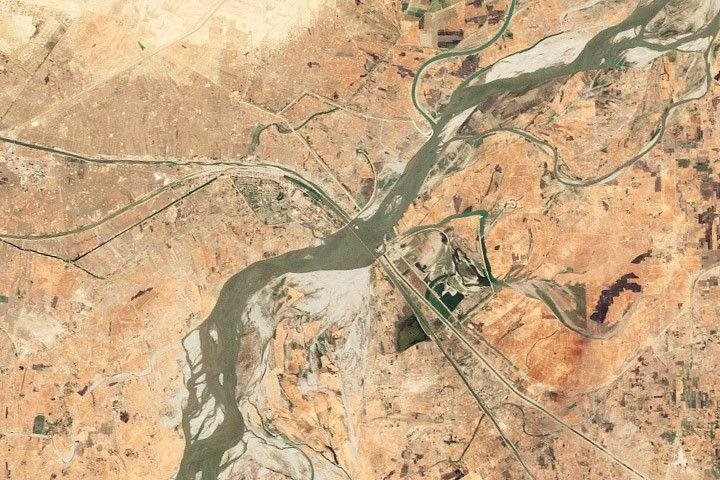
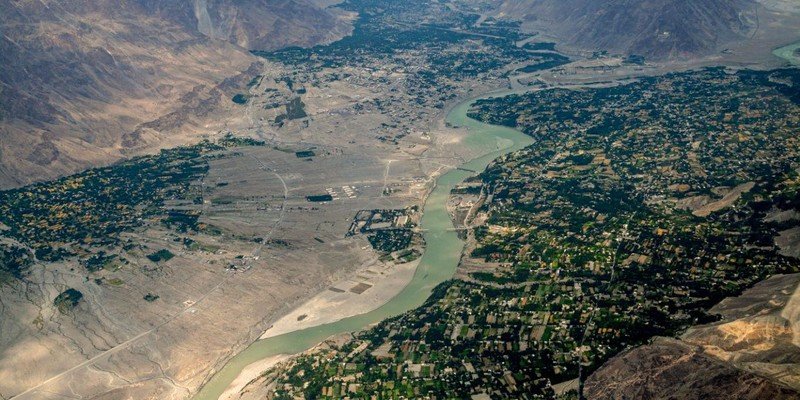
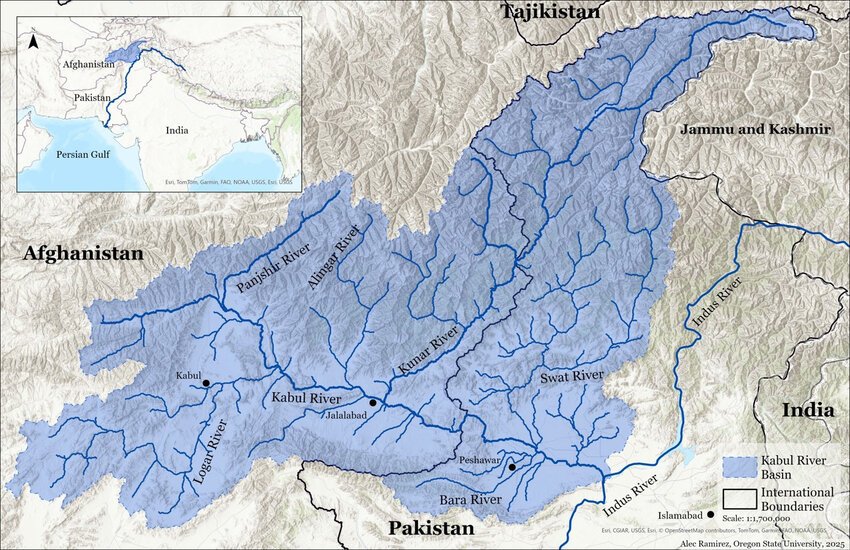
The Kabul River System is one of Afghanistan's five rivers that cross an international border. Originating in the Sanglakh range, it is fed along the way by the Logar, Panjshir, Alingar, and most significantly the Kunar River, which alone contributes more than seventy per cent of the system's flow. The Kabul travels some 700 kilometres(km), with 560 km in Afghanistan and 140 km in Pakistan, before merging with the Indus near Attock, roughly 25 km inside Pakistan from the Durand Line. The river exhibits pronounced seasonal variation: nearly eighty per cent of its annual flow, measured at the Attock gauge, occurs between April and September, peaking in August as the Hindu Kush snowpack melts. This seasonal surge also feeds directly into the Indus and enhances its flow when it matters. It means that Pakistan draws the real benefit from a river it does not control at source.
A Lopsided Basin: Pakistan Built, Afghanistan Waited
The sole water-sharing arrangement ever concluded on the Kabul River was a modest 1921 understanding between the Afghan government and British colonial authorities, which allowed limited Afghan withdrawals near Torkham in exchange for British navigation and irrigation rights downstream. Conceived as an interim measure, this agreement lapsed with the end of British rule in August 1947 and was never renewed.
In the absence of a formal arrangement, Pakistan has utilised the vacuum to its considerable advantage in subsequent decades. Infrastructure such as the Warsak Dam (1960), the Nowshera Barrage and an extensive network of feeder canals now allow Pakistan to draw on an estimated 21 BCM of Kabul-basin water annually, supporting irrigation in a sizeable command in Khyber Pakhtunkhwa and Punjab and generating 240 MW of electricity. Estimates indicate that Pakistan today captures around 70 per cent of the basin's transboundary flow, leaving Afghanistan, the upstream riparian, with less than 30 per cent of the water originating on its own territory. Only 12 per cent of Afghanistan's potentially irrigable land in the eastern river basins has been developed, against 67 per cent on the Pakistani side of the shared watershed. According to Khaama Press, the monetary value of this uncompensated flow into Pakistan is roughly 12 billion USD, based on international water-pricing norms. The precision of this figure may be debatable but not the underlying asymmetry: an upstream state with abundant water but insufficient infrastructure has effectively subsidised a downstream neighbour equipped to capture these resources.
Hydropower Potential and Demand
Afghanistan's hydropower potential also remains largely unrealised. The total potential is estimated at 23,000 MW, with approximately 20,000 MW lying in the northeast on the Amu Darya, Panj and Kokcha river systems. An additional 1,900 MW sits east of Kabul, with over half of it on the Kunar River near the Pakistan border. In contrast, with current domestic generation of only about 600 MW, and the projected peak demand approaching 3,500–4,300 MW by 2032, the gap is stark. A handful of mid-twentieth-century projects—Sarobi, Naghlu, Darunta, and Mahipar—built with German and Soviet assistance, along with the more recent 42 MW Salma Dam, inaugurated jointly by India and Afghanistan in 2016 on the Harirud—show the potential that external partnerships can achieve. However, these projects remain isolated successes rather than a coherent build-out.
Signs of Change: Afghanistan's Own Dam-Building Plans
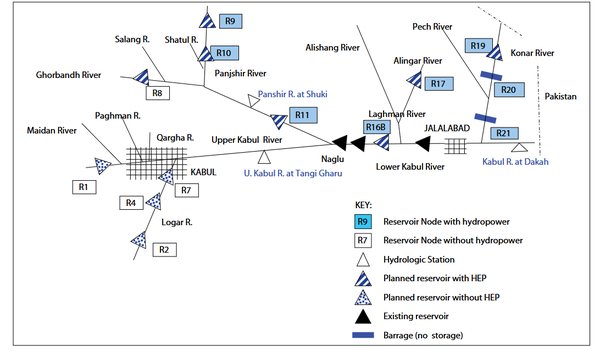
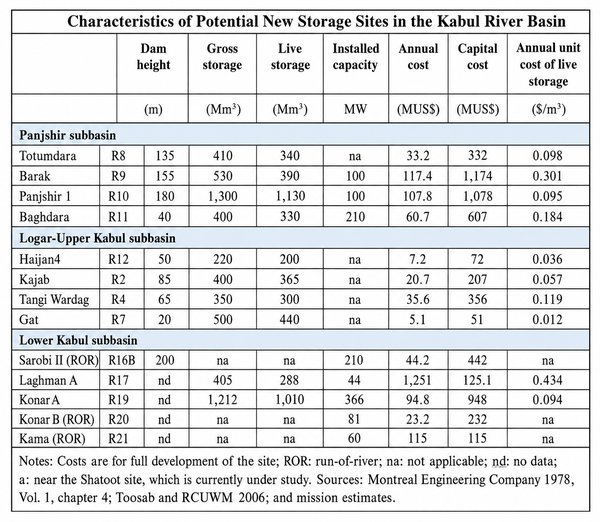
Afghanistan, with the assistance of the World Bank, has identified thirteen storage sites on the Kabul River and its tributaries with a combined capacity of about 4.7 million acre-feet (Figure and Table below), and five smaller dams — Chak, Mahipar, Sarobi, Naghlu and Darunta — are already operational. India's 2021 Memorandum of Understanding to help build the Shahtoot dam near Kabul, before work stalled with the change of government later that year, was a step toward realising this potential.
How Afghan Development Could Unsettle Pakistan's Water Security
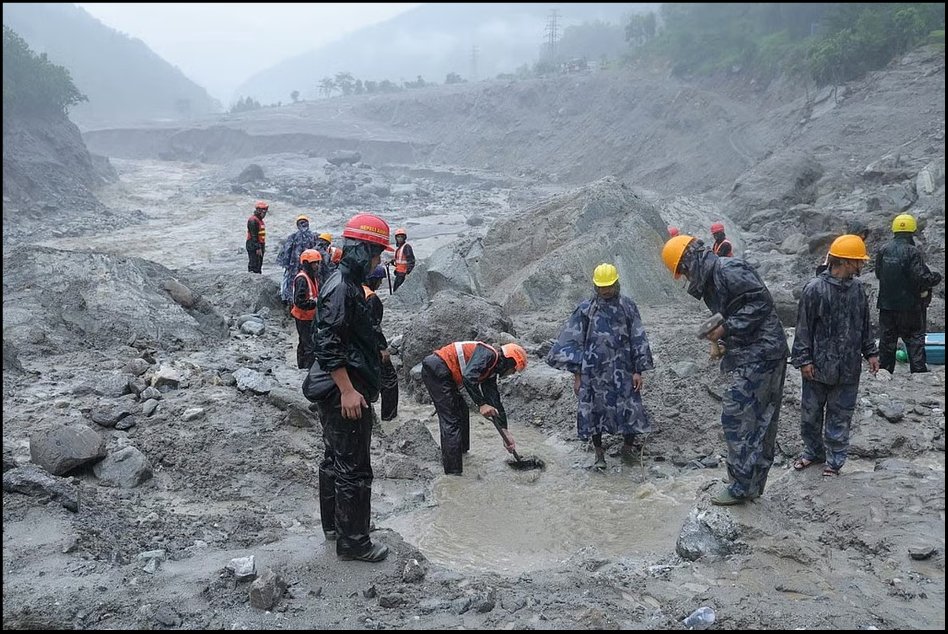
Pakistani analysts have calculated that if the thirteen planned dams on the Kabul River were completed, Pakistan's water supply from the river could fall by sixteen to seventeen per cent. Such a reduction would have direct consequences for the three most agriculturally productive districts of Khyber Pakhtunkhwa, including Peshawar, Nowshera and Charsadda. The Kabul River irrigates roughly 32,000 hectares in Khyber Pakhtunkhwa through four major canals and about a thousand smaller channels, while also recharging aquifers that provide drinking water to millions in Mohmand, Khyber, Peshawar, Charsadda, Nowshera and Mardan. A meaningful drop in flow would show up as reduced irrigation, stressed aquifers and lower agricultural output in some of Pakistan's most productive farmland. This challenge arises when Punjab and Sindh downstream are already contending with strains on the Indus system.
The Treaty Question: From Water Security to Strategic Leverage
Islamabad's unease is compounded by the absence of any binding treaty with Kabul. Pakistan has repeatedly sought one such agreement through bilateral channels, the World Bank and other international forums between 2001 and 2014. Afghanistan, however, has consistently deferred negotiations, citing an incomplete national water policy and insufficient hydrological data. The deeper reason is more structural: since Pakistan has already built extensive infrastructure on the Kabul basin, any treaty modelled after the Indus Waters Treaty would tend to lock in Pakistan's existing advantage, much as the 1997 UN Watercourses Convention's emphasis on "existing and potential uses" implicitly favours whichever party developed first. For example, during the initial negotiations of the Indus Waters Treaty, Pakistan was utilising about 66 million acre-feet (MAF) of waters compared to only about 9 MAF in India. This was one of the many factors for the asymmetric allocation against India in the Indus Waters Treaty.
Taking their lesson, Afghan officials have candidly observed that international law governing transboundary rivers tends to reward early movers. Consequently, for Kabul, building out its own storage and irrigation capacity before formalising any water-sharing framework is not simply a development goal but a negotiating necessity. It is the only way that can ensure a future treaty that reflects Afghanistan’s own needs rather than ratifying a status quo written entirely on Pakistan's terms.
This situation inescapably reflects a live regional fault line. Pakistan has floated the option of diverting a substantial share of the Chitral river, which is known as the Kunar once it crosses into Afghanistan. Since the Kunar/Chitral supplies the majority of the Kabul system's water, such a diversion would directly undermine Afghanistan's own plans. A full Pakistani diversion could, over time, turn productive Afghan farmland barren and dry out aquifers, which might lead to displacement and migration pressures along the border. These outcomes would ultimately destabilise the same Pakistani border districts the diversion was meant to protect. Water security in Kabul, in other words, is not a zero-sum contest; unilateral actions by either side increase the likelihood of reciprocal measures, with ordinary farming at the district-level losing on both sides rather than planners in Islamabad or Kabul.
India’s Opportunity
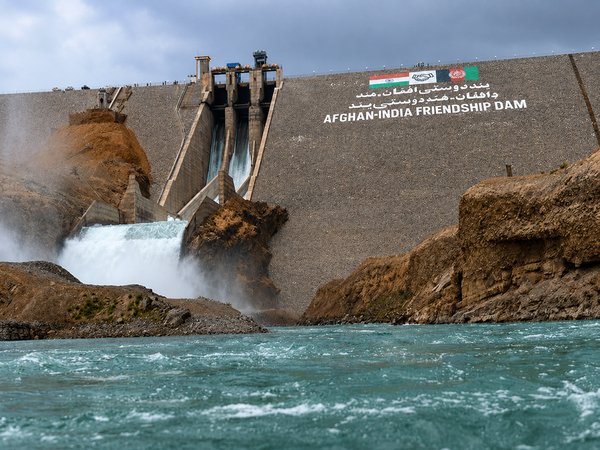
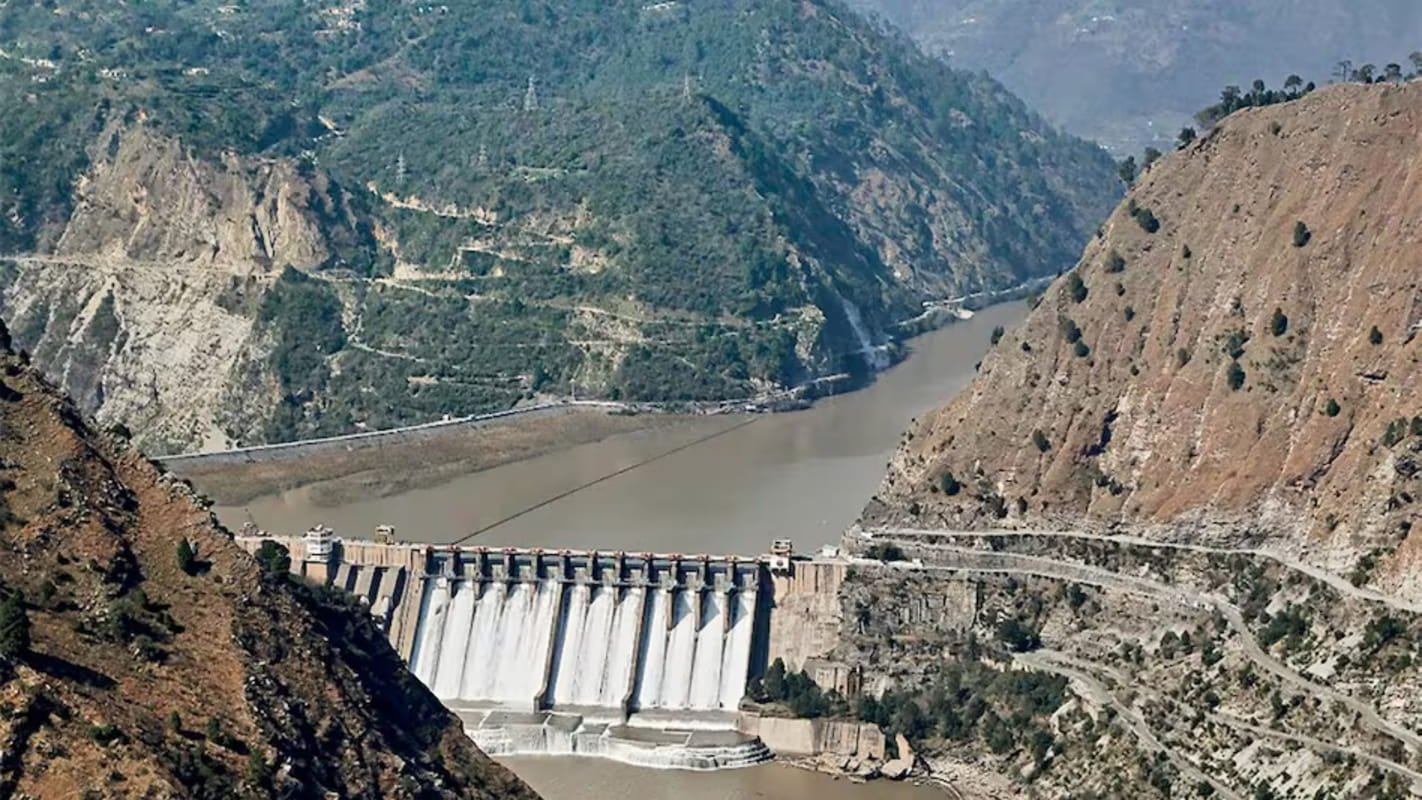
Afghanistan-India Friendship Dam, Hari River, Herat Province | Dainik Jagran
India's engagement with Afghan water infrastructure is not new. The Salma Dam on the Harirud — inaugurated jointly by the two countries' leaders in 2016 and known locally as the Afghan-India Friendship Dam — added 42 MW of generation capacity and stabilised or extended irrigation across some 75,000 hectares. The 2021 MoU on the Shahtoot dam near Kabul, though interrupted, showed New Delhi's readiness to go further, including on the more contentious Kabul basin itself.
Pakistan has, predictably, viewed this cooperation with suspicion, reading Indian assistance on the Kabul River as strategically motivated rather than developmental. That reaction should not be allowed to define India's choices. Afghanistan's need for dams, canals and hydropower is genuine and long-standing, rooted in decades of conflict rather than in any design against a third country; addressing it is squarely in keeping with the long history of India-Afghanistan cooperation and with India's own experience — as both an upper and a lower riparian on various rivers — of what well-planned water infrastructure can do for food security, rural incomes and energy access.
India has traditionally been a friend to Afghanistan, and that relationship carries a responsibility as much as an opportunity. Helping Afghanistan build the storage, irrigation and hydropower capacity it has been denied for so long — through resumed work on Shahtoot, support for the twelve identified storage sites on the Kabul system, and continued investment in transmission and irrigation networks — would do more than address a humanitarian and developmental need.
Furthermore, India’s support would give Afghanistan the negotiating footing it currently lacks to eventually reach a fair, data-based water-sharing arrangement with Pakistan, rather than one dictated entirely by the notion of ‘who built first’. India should come forward, as a good neighbour and a long-standing partner, and lend its expertise and resources to help Afghanistan finally develop the water resources that have, for a century, flowed past it unutilised.
[The article is exclusive to NatStrat. The views expressed by the author(s) are personal and do not necessarily reflect the views of the organisation.]
References
Separating Reality from the Rhetoric: Facts, Fiction, and the Indus Waters Treaty