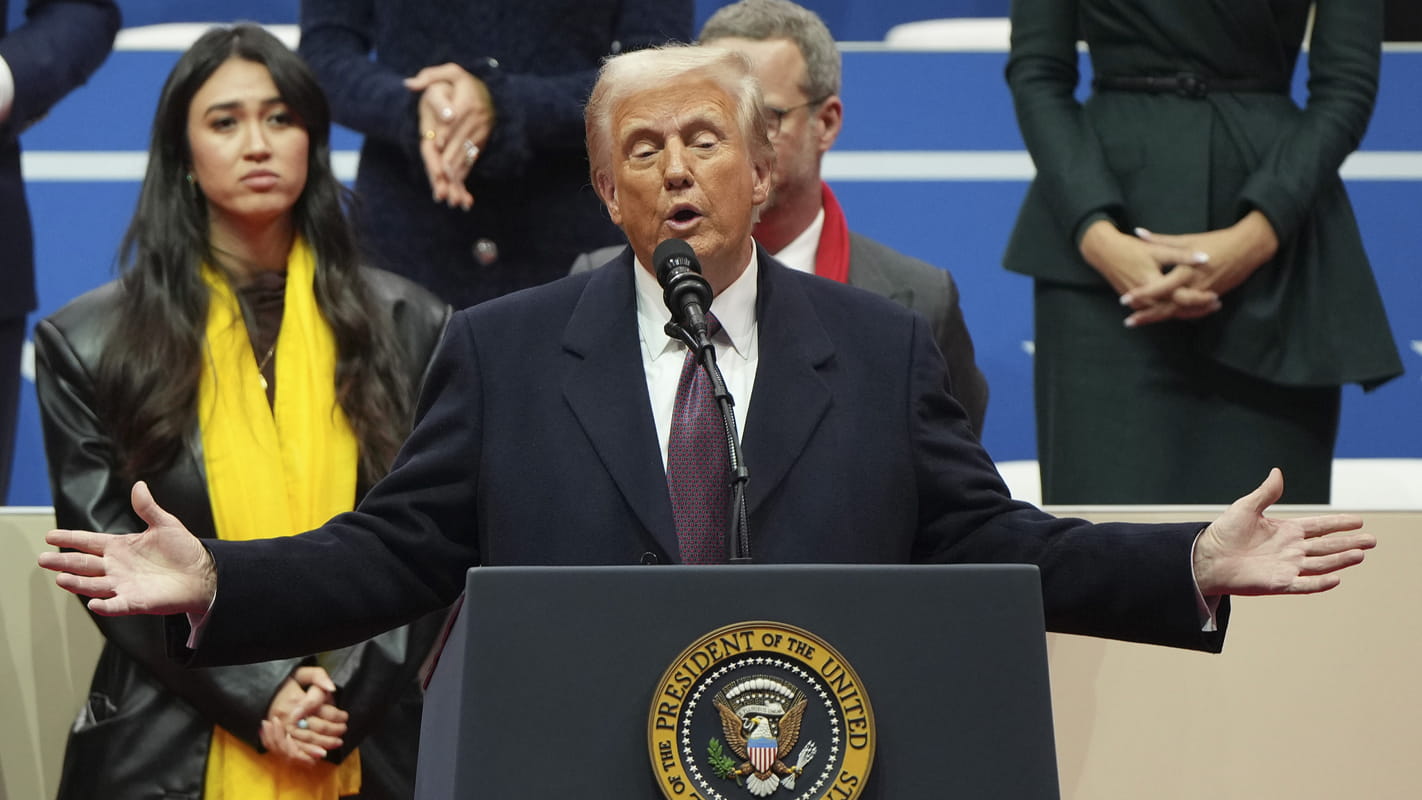
President Kassym-Jomart Tokayev with Prime Minister Narendra Modi on the sidelines of BRICS Summit in New Delhi| DD News

India and Kazakhstan are not direct neighbours in the conventional geographical sense. However, geography should not determine the relationship. In the twenty-first century, countries are connected not only by borders, but by corridors, supply chains, technologies, investment, knowledge, people and ideas. The strategic task before India and Kazakhstan, therefore, is to turn geographical distance into connectivity, political goodwill into economic partnerships, and historical ties into a modern strategic relationship.
India- Kazakhstan Relationship: An Overview
The India–Kazakhstan Strategic Dialogue 2026 held on 24 September in Astana took place at a time when the bilateral relationship between the two countries has acquired a new degree of strategic relevance.
The timing could not be more appropriate, as President Kassym-Jomart Tokayev met with Prime Minister Narendra Modi on the margins of the BRICS Summit in New Delhi on 13 September, 2026. The two leaders reviewed a remarkably broad agenda, from trade, energy, and connectivity to critical minerals, emerging technologies, security, and people-to-people ties, and reaffirmed their commitment to strengthening the strategic partnership between our countries.
While the two countries are now cooperating closely, the next step forward is to explore ways to make this strategic partnership more consequential. This is particularly important as we are living through a period in which the international environment is changing faster than many of the institutions and established patterns of cooperation. The global economy is becoming more fragmented. Supply chains are being reassessed, and connectivity is acquiring a strategic dimension. Energy security and critical minerals are moving higher on national agendas. At the same time, digital technologies, artificial intelligence and new forms of economic interdependence are reshaping the meaning of national competitiveness.
For countries such as India and Kazakhstan, these changes present not only challenges but also new opportunities. India is one of the world’s major economic, technological and demographic centres, with an increasingly important role in shaping the global agenda. Kazakhstan, meanwhile, occupies a distinctive position at the intersection of Europe, Asia, Russia, China and the broader Middle East, while possessing substantial energy and mineral resources and an increasingly important role in Eurasian connectivity.
India and Kazakhstan have different geographical positions, but in some respects they complement each other. This geographical diversity provides a foundation for a partnership that extends beyond bilateral engagement, making both countries as a bridge between regions.
Kazakhstan is India’s largest trade and investment partner in Central Asia. The two countries have also developed a substantial institutional architecture for cooperation, including the Inter-Governmental Commission and a number of joint working groups covering trade, transport and logistics, hydrocarbons, information technology, space, defence and other areas. However, institutions and political goodwill constitute only part of the equation.
An interesting paradox marks the relationship. Politically, India and Kazakhstan have developed a strong level of mutual trust. Economically, though, the relationship remains considerably smaller than its potential. Kazakhstan’s official figures put bilateral trade at about USD 923 million in 2025, while Indian and Kazakh officials have repeatedly spoken about the possibility of expanding trade towards USD 3 billion.
This gap between political potential and economic reality should be one of the central questions of the discussion among the policymakers. Although trade figures alone do not define the quality of a relationship, a genuinely strategic partnership ultimately requires a sufficiently broad economic foundation.
Potential Areas of Cooperation
There are several areas where the next stage of cooperation between India and Kazakhstan could be particularly significant that need to be identified.
Connectivity
First and the most crucial one is connectivity. For decades, geographical distance between Central Asia and South Asia has been one of the structural constraints on the economic relations. This is precisely why initiatives such as the International North–South Transport Corridor (INSTC) and the use of Chabahar Port deserve sustained attention. At the 4th India–Central Asia Dialogue in 2025, the participating countries specifically emphasised the importance of the INSTC and welcomed Kazakhstan’s efforts concerning its eastern branch. They also stressed the need to simplify transit procedures and make greater use of mechanisms such as the TIR (Transports Internationaux Routiers/ International Road Transport) Carnet.
Connectivity, however, should not be understood simply as building roads, railways or ports. Connectivity is ultimately about making economic interaction easier. It means predictable transit procedures, efficient customs, financial connectivity, digital platforms, direct air links and reliable business-to-business contacts. There has been some encouraging movement in this direction. In June this year, Kazakhstan and Gujarat discussed launching direct flights between Almaty and Ahmedabad, alongside cooperation in pharmaceuticals, agriculture and investment.
Economic Diversification
The second important area of cooperation is economic diversification. Energy will remain an important component of the bilateral relationship. Kazakhstan has long been an important partner for India in the nuclear-energy sphere, including uranium supplies.The future relationship, however, should not be defined by hydrocarbons and uranium alone.
There is a much broader agenda before us: critical minerals, pharmaceuticals, agriculture and food processing, information technology, artificial intelligence, renewable energy, petrochemicals, logistics, healthcare and advanced manufacturing. India has itself identified many of these sectors as areas with substantial potential and recent bilateral discussions have highlighted critical minerals, digital technologies, pharmaceuticals, agriculture and renewable energy.
In other words, the question is not simply how much more can the two countries trade? It is also what can they produce together? That is a more strategic question.
Technology & Human Capital
The third dimension is technology and human capital. India’s experience in digital public infrastructure, IT, pharmaceuticals, space and technological innovation is highly relevant to Kazakhstan and to Central Asia more broadly.
At the 4th India–Central Asia Dialogue, India offered cooperation in developing digital public infrastructure, while the participants agreed to establish an India–Central Asia Digital Partnership Forum. Cooperation in science, technology, space and innovation was also identified as a priority. This is an area where the cooperation could become much more ambitious.
Kazakhstan does not need simply to import technologies from India. The two partners should also look for opportunities to co-develop solutions, establish joint research and innovation projects, and connect our technological ecosystems.
The same principle applies to education. The relationship between the two societies cannot be built entirely through governments and businesses. Universities, think tanks, young professionals, researchers and students play an increasingly important role.
A strategic relationship requires not only diplomatic mechanisms but also an intellectual infrastructure, people who understand each other’s societies, strategic cultures, economic models, and regional perspectives.
Multilateral Cooperation
It is also critical to highlight the importance of multilateral cooperation between India and Kazakhstan. The two interact with each other through the United Nations (UN), the Shanghai Cooperation Organization (SCO), Conference on Interaction and Confidence-Building Measures in Asia (CICA) and other international platforms.
Kazakhstan is now a BRICS Partner Country, while India holds the BRICS chairmanship in 2026. During the recent bilateral meeting in July, the two sides specifically discussed cooperation within BRICS, including trade and investment, connectivity, digitalisation, artificial intelligence, energy and sustainable development. This adds another layer to the bilateral relationship.

India–Kazakhstan Strategic Dialogue 2026 held on 24 September in Astana | Arman Aisultan/ Qazinform
Shared Principles & Interests
The two countries do not necessarily have identical positions on every international issue – nor should they. Though there is considerable scope for cooperation on principles that are important to both such as respect for sovereignty and territorial integrity, a stronger voice for developing and middle powers, reform of global governance institutions, greater connectivity across Eurasia, and a more inclusive international economic system.
And perhaps this is one of the most important reasons for having a strategic dialogue rather than simply a business forum or a roundtable. While a business forum asks: Where are the opportunities? A strategic dialogue should also ask: What kind of regional and international environment do we want to help create?
India and Kazakhstan are both countries with strong interests in stability, sovereignty, connectivity and development. Both are also geographically located in regions where the interaction of major powers is becoming increasingly consequential. Therefore, the cooperation between them should not be viewed through a narrow bilateral lens.
A stronger India–Kazakhstan relationship can deepen connectivity between Central Asia and South Asia, diversify economic partnerships, and strengthen the resilience of the wider Eurasian space.
Anchoring Regional Stability and Economic Integration in a Multilateral World
Today, the word anchoring merits emphasis. In a period of uncertainty, stability does not come from isolation. It comes from having more connections, more channels of dialogue, more economic interdependence and more institutions through which differences can be managed. India and Kazakhstan can contribute to that process in their respective regions and through their bilateral relationship.
While there is a need to look at the wider strategic environment, the relationships between states ultimately become durable when they are relationships between societies through connectivity, energy, tourism and public diplomacy hold equal importance.
And there are some encouraging signs in this direction. Indian visitors to Kazakhstan have substantially grown in the past few years, and the number is expected to reach around 250,000 in 2025. Direct air connectivity is also expanding, while both sides explore additional links between their major cities.
When it comes to tourism between India and Kazakhstan, it does not remain limited merely as an economic sector. For countries that have maintained civilisational links across Eurasia for centuries, tourism along with educational, cultural and academic exchanges can help rediscover connections that modern borders sometimes obscure.
Conclusion
The relationship between Kazakhstan and India did not begin in the 1990s. Diplomatic relations might have begun in 1992, but the interaction of peoples, ideas, traders and cultures across Central and South Asia have been much older. Perhaps the task of the next generation is not simply to just celebrate that history, but to translate it into a modern partnership suited to the twenty-first century.
There is a need to build a future-oriented roadmap for India–Kazakhstan strategic and economic cooperation. To achieve so, the stakeholders in both the countries need address three simple questions:
India and Kazakhstan are not direct neighbours in the conventional geographical sense. However, geography should not determine the relationship. In the twenty-first century, countries are connected not only by borders, but by corridors, supply chains, technologies, investment, knowledge, people and ideas. The strategic task before India and Kazakhstan, therefore, is to turn geographical distance into connectivity, political goodwill into economic partnerships, and historical ties into a modern strategic relationship.
[This article is based on Dr. Dauren Aben’s remarks at the inaugural session of the India–Kazakhstan Strategic Dialogue 2026, held on 24 September in Astana. It has been edited by NatStrat for publication purposes.]
Separating Reality from the Rhetoric: Facts, Fiction, and the Indus Waters Treaty