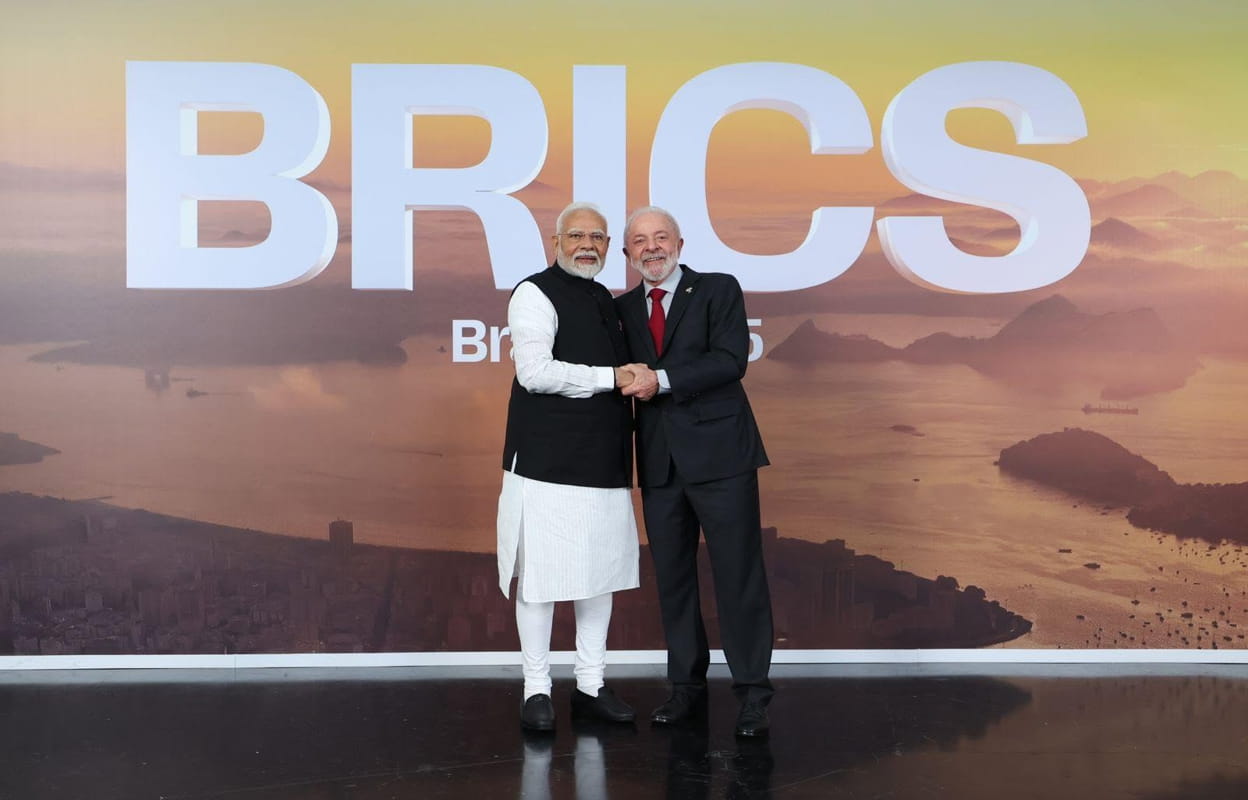


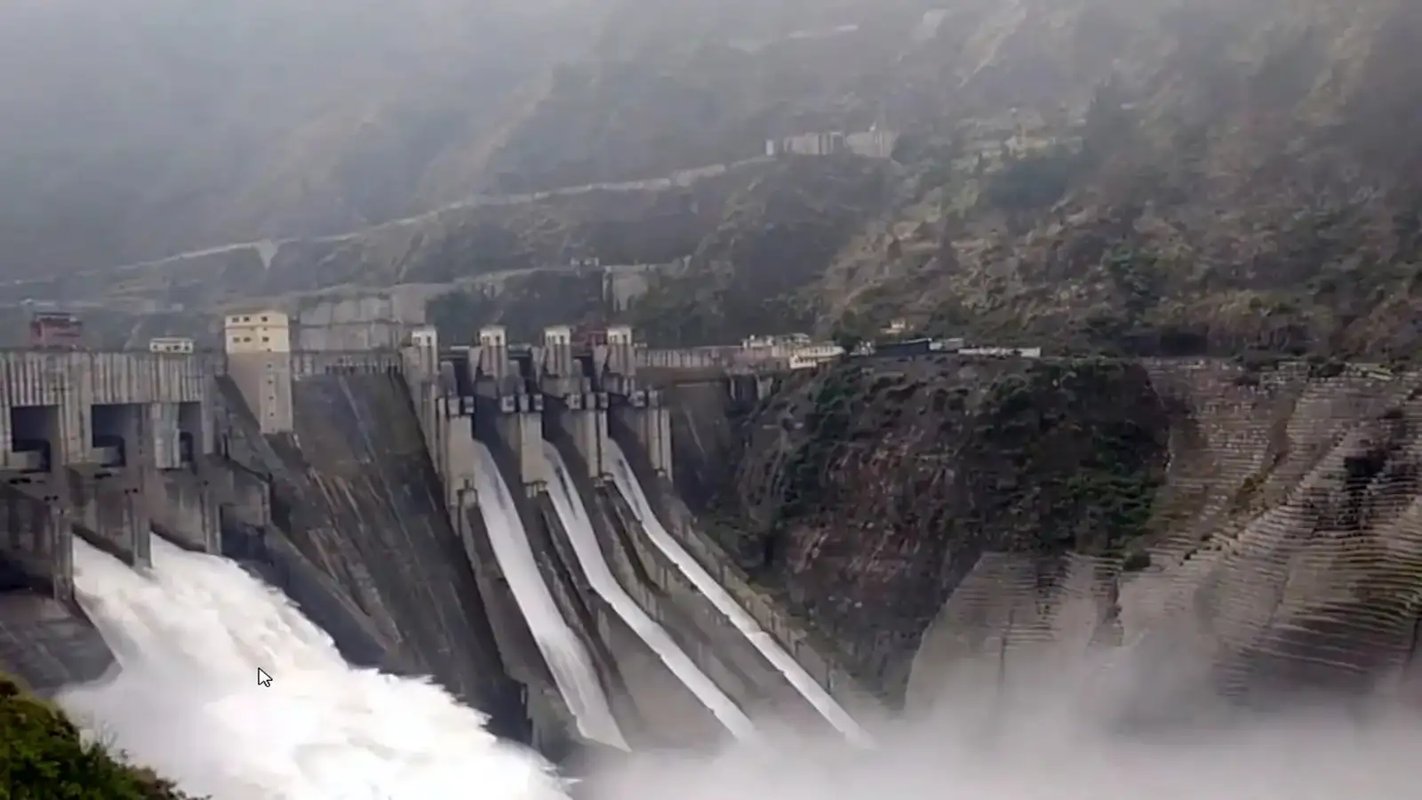
Representative image.

In navigating conflicts, competition and diplomatic challenges, India does not claim to have all the answers but it is determined to ask the right questions, advance creative coalitions, and keep faith with both its civilisational values and its global responsibilities.
Introduction
Excellencies, senior colleagues, distinguished scholars and friends,
It is a privilege to address this conference on “India at the Epicentre: Strategic Responses to Global Turbulence” at this amazing campus, which is a monument to India’s efforts to share its knowledge and education with youth from the rest of the world. It is also great to see a number of my seniors in the Foreign Service here – our mentors and gurus – at whose feet we learnt our tradecraft; it makes one somewhat nervous to speak on a subject such as this.
We meet at a time when the world is witnessing a poly-crisis – from a fractured international order with competing institutional architectures, to great‑power tensions and regional wars, to geoeconomic shocks, technological disruption, and the growing salience of non-traditional challenges such as pandemics, climate change, and transnational extremism. The relative certainties that shaped the post-Cold War moment are eroding, the assumptions of globalisation are being revisited, major-power rivalry is sharpening, and many regions across the world – from Europe to West Asia, from the Indo-Pacific to Africa – are experiencing simultaneous and overlapping challenges.
In this environment, India stands at a particularly consequential juncture. Its rise is not merely a story of economic growth or demographic weight; it is about the expanding responsibilities and expectations that accompany strategic capability, diplomatic credibility and normative influence. India is no longer being asked whether it will contribute to addressing global challenges; rather, it is increasingly expected to do so. This is, in many ways, what places India ‘at the epicentre’ of global conversations today.
Over the years, India’s foreign policy has been built around the idea of strategic autonomy in an interdependent world: engaging all, aligning with none, and remaining firmly anchored in national interest. In recent years, this has also been accompanied by a conscious articulation of India as a civilisational state, drawing on older traditions of statecraft and ethics, to shape a contemporary grammar of international relations.
Our task today is not just to look at India’s responses to global turbulence but to reflect on the ideas that underwrite them and the kind of global order they seek to advance. This conference has been thoughtfully structured, in the form of several key themes for analysis. Let me try and take up some of them, in terms of setting the context.
India as a Civilisational State
For India, foreign policy has never been merely transactional; it is inseparable from civilisational memory, normative commitments and societal aspirations. Long before the language of the ‘rules‑based order’ emerged, the subcontinent’s statecraft wrestled with questions of dharma in politics and war, restraint in power, and responsibility in the use of force.
India’s domestic experience with diversity shapes its comfort with a multi-polar and multi-civilisational world. This is reflected in India’s support for dialogue-based solutions, inclusive multilateralism and non-coercive partnerships.
As the post‑Cold War unipolar phase gives way to more dispersed and contested power centres, the experience of a civilisational state that has navigated centuries of shifting hierarchies will acquire renewed salience. India’s foreign policy today does not reject the Westphalian system but consciously supplements it with civilisational confidence and the belief that diversity of political and cultural models must be accommodated, not erased.
Strategic Autonomy
India today is one of the fastest‑growing major economies, soon to become the world’s third‑largest economy and a vision to attain the status of an upper-middle income nation by 2047. This domestic transformation is the bedrock on which external partnerships are being re‑imagined.
The defining challenge of our time is to preserve room for independent decision‑making when great‑power rivalry has returned and conflict theatres from Ukraine to West Asia are reshaping global alignments. India’s answer has been a mature, interest‑based strategic autonomy which rejects both isolation and bloc politics, while maintaining principled positions on sovereignty, territorial integrity and non‑intervention.
Rather than being a passive recipient of norms, India seeks to co‑write the vocabulary of the emerging order, whether on connectivity, climate change, technology or maritime governance.
This is visible in our calibrated approach to key relationships.
The India-USrelationship has undergone a structural transformation. It is now driven by shared strategic concerns in the Indo-Pacific, supply-chain security, critical technologies, digital governance and maritime stability. The partnership today is deep, yet purposely non-allied. This is an important nuance: India seeks to cooperate but without compromising autonomy.
With Europe, India shares convergent interests as pluralistic democracies and market economies, seeking to de‑risk supply chains, build trusted technology ecosystems and uphold open societies against authoritarian and digital threats. The ambition of an India‑EU Free Trade Agreement, the Trade and Technology Council and cooperation in green and digital transitions, all reflect this widening agenda.
India’s relationship with China remains its most complex bilateral challenge. Border tensions since 2020 have fundamentally altered the equilibrium. At an academic level, one can argue that our China policy reflects the interplay of three variables: power asymmetry, territoriality and geopolitical spillover into the Indo-Pacific. The contested relationship with China has compelled India to re‑evaluate assumptions on border management, economic dependence and technology flows, even as channels of dialogue remain open.
India-Russia ties present an instructive case of how historical legacies and contemporary imperatives, coexist and also compete. India has condemned civilian casualties, supported respect for the UN Charter, advocated diplomacy and dialogue, and simultaneously safeguarded, despite Western pressure, long‑standing defence and energy linkages critical to national security.
In West Asia, India has deep strategic stakes with the Gulf, vital energy and diaspora linkages, a robust partnership with Israel, and a complex relationship with Iran, demanding a nuanced and balanced diplomacy, even as the conflict in Gaza and regional tensions unsettle the wider neighbourhood. Thus, India’s approach essentially integrates maritime and energy security, labour mobility, maritime stewardship and diaspora engagement.
Africa stands at the heart of India’s South‑South engagement, from the India‑Africa Forum Summit process and development partnerships spanning the entire continent, to India’s successful championing of the African Union’s accession to the G20. The complementarities of demography, resources, markets and innovation can help shape a more equitable global economic order.
Representative image. | The Hawk.
In the Indo‑Pacific, ASEAN remains central to India’s Act East policy, with deepening cooperation in trade and investment, connectivity, maritime security, digital transformation and resilient supply chains. The India‑ASEAN Comprehensive Strategic Partnership is increasingly a pillar of regional stability and a driver of growth in the broader region.
India’s immediate neighbourhood is central to its foreign policy identity, and is framed in terms of its ‘Neighbourhood First’ approach. Geography, history and deep socio-economic linkages create a unique political arena in South Asia and the extended Indian Ocean region. The transformations in South Asia over the past decade – political churn in Bangladesh, persistent terrorism and cross‑border violence emanating from Pakistan, economic crises in Pakistan and Sri Lanka, the Taliban’s return to power in Afghanistan, and the intensifying imprint of external powers – have fundamentally altered India’s immediate environment.
India’s Neighbourhood First policy has therefore had to evolve from declaratory goodwill to a more hard‑nosed and agile mix of deterrence, crisis‑response, engagement, security cooperation, development partnership and capacity‑building.
India has sought to underwrite regional stability through lines of credit, currency support, infrastructure projects, energy interconnection and humanitarian assistance, recognising that its own rise is inseparable from the prosperity of its neighbourhood. At the same time, persistent terrorism, border management challenges and concerns about democratic backsliding and radicalisation demand a vigilant, and sometimes firm, security posture.
Given the limitations of SAARC, India has increasingly relied on alternative regional and plurilateral formats – BIMSTEC, sub‑regional connectivity corridors, trilaterals and quadrilaterals – to sustain cooperation in trade, energy, disaster management, and people‑to‑people ties.
The civilisational and cultural bonds of South Asia remain deep but they need to be hard-wired and reinforced by modern connectivity infrastructure, economic interdependencies, digital linkages, and shared approaches to climate resilience and migration.
Thus, what emerges from this landscape is a pattern of complex interdependence without undue dependence, partnerships without exclusivity, and an emphasis on shaping the environment rather than choosing sides.
Strategic autonomy, in this sense, is not a stipulation of distance but an assertion of agency. In a fragmented world, India’s approach reflects the logic of strategic hedging, coalition pluralism and risk diversification.
It is no longer an abstract doctrine; it refers to the continuous practice of partnering without dependence, deterring without escalation, and engaging without surrendering agency. It is enabled by growing comprehensive national power at home and expressed through diversified partnerships abroad.
The Battle over Supply Chains
The geo‑economic dimension of global turbulence is now unmistakable: tariffs as weapons, sanctions as routine tools, financial flows as instruments of pressure and supply chains as theatres of contest. A world that once celebrated efficiency above all now increasingly values security, resilience, redundancy and reliability, even at higher cost.
For India, this environment poses both risks and opportunities.
On the one hand, excessive concentration of manufacturing in a single geography and the securitisation of interdependence have underscored the perils of over‑reliance on any one supplier or market.
On the other, India’s scale, growth trajectory and reform momentum position it as a natural hub in the re‑architecting of global value chains, especially as companies and governments look for trusted, diversified partners and locations.
Domestic policy has accordingly shifted from a narrow participation in global value chains to a more ambitious strategy of building competitive capacity at home: through production‑linked incentives, infrastructure expansion, labour and skill development, logistics reforms, and a focus on sunrise sectors such as semiconductors, critical minerals, advanced manufacturing and clean energy.
Externally, India has sought to negotiate fair and balanced trade agreements, deepen connectivity platforms such as the India‑Middle East‑Europe Economic Corridor, and support frameworks that enable mobility, democratise production and extend manufacturing to more geographies in the Global South.
At the systemic level, India has consistently cautioned against a slide into hyper‑protectionism and fragmentation of the multilateral trading system. The objective is not a nostalgic defence of the old order but an insistence that any systemic reform or re‑balancing must remain open, transparent, non‑discriminatory and development‑friendly, especially for vulnerable economies.
From SAGAR to MAHASAGAR
The Indian Ocean is no longer merely a historical memory of trading routes; it is once again a central arena of strategic competition, connectivity initiatives and blue‑economy opportunities.
India’s maritime posture – which includes strengthening coastal surveillance, partnerships with foreign navies, humanitarian and disaster relief operations, and participation in multilateral exercises – reflects an understanding that the Indo-Pacific is not merely a geographic concept but a strategic continuum.
India’s maritime vision has evolved from SAGAR – Security and Growth for All in the Region – to the more expansive MAHASAGAR, or Mutual and Holistic Advancement of Security and Growth for All in the Region. SAGAR emphasised a safe, secure and stable Indian Ocean Region, deepening cooperation with littoral and island states, building capacity, and encouraging collective action on traditional and non‑traditional threats. MAHASAGAR extends this by integrating economic diplomacy, technological connectivity, environmental stewardship and ocean governance, positioning India as both a regional security provider and a responsible maritime stakeholder.
In practice, this finds expression in stronger engagement with regional organisations, coordinated responses to piracy, illegal fishing and natural disasters, and support for freedom of navigation and peaceful dispute-resolution in accordance with international law. It is also reflected in India’s development partnerships across the Indo‑Pacific – from ports and coastal infrastructure to digital and capacity‑building projects – that link maritime security with sustainable development.
Minilaterals and Diversified Partnerships in the Indo‑Pacific
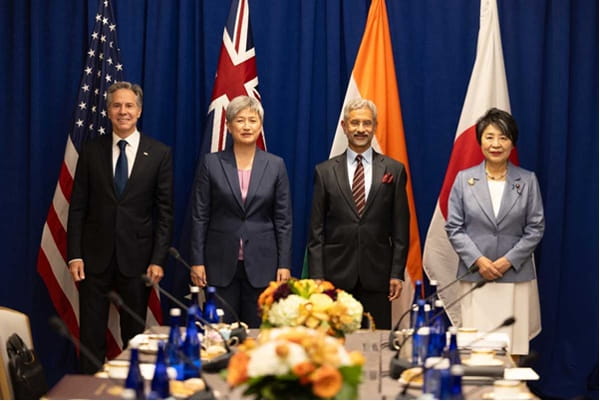
The Foreign Ministers of the four QUAD countries. | X: @SecBlinken.
The paralysis of multilateral institutions has not ended the search for collective solutions; instead, it has given rise to flexible, purpose‑driven coalitions-of-the-like-minded, or minilaterals.
In the Indo‑Pacific, these mechanisms range from security‑oriented arrangements like the Quad and AUKUS, to economic and connectivity initiatives such as I2U2 and IMEC, to regional and functional platforms like IORA and IONS.
India views these not as substitutes for multilateralism but as complementary formats that can act faster, innovate more readily and address specific challenges from supply chain resilience and maritime domain awareness, to critical technologies and infrastructure standards.
Membership in frameworks as diverse as Quad, BRICS, SCO, I2U2 and others is a conscious expression of multi‑alignment: engaging different sets of partners on distinct agendas without making any relationship exclusive.
The litmus test of these minilaterals, of course, will be their ability to deliver public goods – security of sea lanes, transparent and sustainable infrastructure, trusted technology, better disaster response and climate resilience – while avoiding institutional duplication and rivalry. India’s effort has been to encourage complementarity: ensuring that what is done in smaller coalitions reinforces, rather than erodes, broader regional and global norms.
Diplomacy of Disruptive Technologies
The frontier of diplomacy is increasingly digital. Emerging areas such as artificial intelligence, quantum technologies, robotics, cyber tools, outer space systems and biotechnology are reshaping both power hierarchies and vulnerabilities.
India approaches this landscape with a dual consciousness: the imperative of technological sovereignty and security and the responsibility to leverage technology for inclusive development at scale.
The experience of building a robust digital public infrastructure – often referred to as the India Stack – has shown how interoperable platforms can transform service delivery, financial inclusion and governance in a country of 1.4 billion people.
On the global stage, India advocates democratic technology governance: open standards, responsible AI, protection of privacy, transparency in algorithms and safeguards against bias and manipulation.
In parallel, it is investing in semiconductor ecosystems, telecom diversification, cyber resilience and space capabilities, while exploring technology partnerships that are de‑risked from excessive dependence on any single supplier or jurisdiction.
A critical element of this diplomacy is South‑South cooperation in the digital domain. India has offered its digital public infrastructure as a ‘transferable developmental model’ for other developing countries, underlining that technology must narrow, not widen, the global development divide.
Reformed Multilateralism
Even as India remains a strong votary of the UN Charter and multilateralism, it has been candid about the deep dysfunction of current institutions. The mismatch between the composition of bodies like the UN Security Council, and the realities of 21st century power and population, is now too stark to ignore.
Gridlock on issues ranging from terrorism designations and conflict resolution, to climate finance and development, has eroded the credibility of multilateral mechanisms. The slowing of the SDG agenda, the inequities of pandemic response and the uneven impact of sanctions and financial tightening on the Global South have all underscored the urgency of reformed multilateralism.
India’s answer has been two-fold: to push for structural reform, including an expanded and more representative Security Council and retooled international financial institutions; and, concurrently, to use coalitions like the G20, BRICS, IBSA and the Voice of the Global South to advance concrete outcomes.
During its G20 presidency, India helped refocus the agenda on development, climate action, data for development, and inclusive digital public infrastructure. BRICS, too, has become a forum where concerns about the weaponisation of finance, the volatility of trade and the equity of climate responsibilities are increasingly being looked at from the perspective of emerging and developing economies.
Through all this, India has consistently emphasised that multilateralism must deliver both peace and development, if it is to retain legitimacy.
India and the Global South
Perhaps no aspect of India’s foreign policy has seen greater normative articulation than its engagement with the Global South, where India has sought to position itself not as a spokesperson but as a bridge, an enabler of agency, and a provider of public goods.
Conceptually, India’s Global South diplomacy challenges the notion that global order reform requires only great-power consensus. Instead, it argues that legitimacy and fairness must come from the periphery as much as from the centre. This is also a critique – quiet but persistent – of global governance structures that have failed to adapt to new realities and deliver inclusive outcomes.
The clearest expression of India’s evolving role is its self‑conscious positioning as a bridge and voice for the Global South. The Voice of the Global South Summits convened by India have brought together over a hundred countries to articulate shared concerns on debt, food and energy security, climate justice and technology access.
Initiatives such as the International Solar Alliance, the Coalition for Disaster Resilient Infrastructure, the Global Biofuels Alliance and support for digital public infrastructure across continents exemplify how India seeks to move from rhetoric to tangible public goods.
India’s own development journey and its record of sharing vaccines, medicines, capacity‑building and infrastructure support with partner countries, provides a degree of credibility to this leadership claim.
Conclusion
India’s foreign policy today is an attempt to safeguard national interests while contributing to the global common good, to maintain strategic autonomy while deepening partnerships, and to bring civilisational depth to bear on contemporary statecraft.
The coming decades will test whether the international community can re‑imagine multilateralism, humanise globalisation, discipline technology with ethics, and align climate ambition with developmental fairness. India intends to be an active shaper of these debates: as a civilisational state, as a rising pole in a multipolar world and as a steadfast partner to the Global South and the wider international community. In this quest, sustained economic growth, technological competence, enhanced defence capabilities, and credible disaster and humanitarian relief operations have provided India the means to act on its choices.
As we move towards 2047, India’s external journey will be guided by three enduring impulses – securing its sovereignty and people, enabling accelerated and inclusive development, and shaping a new order in which a diversity of paths and perspectives is truly respected.
In navigating conflicts, competition and diplomatic challenges, India does not claim to have all the answers but it is determined to ask the right questions, advance creative coalitions, and keep faith with both its civilisational values and its global responsibilities.
(This is the text of the Inaugural Address delivered by the author at the International Relations Conference on “India at the Epicentre: Strategic Responses to Global Turbulences Navigating Conflicts, Competition, and Diplomatic Challenges” at Symbiosis International, 29-30 November 2025).
Separating Reality from the Rhetoric: Facts, Fiction, and the Indus Waters Treaty
Hedging Without Punishment: Vietnam, India, and the Unequal Burden of Strategic Autonomy