


Representative image. | South Florida Business & Wealth.

The new global order is emerging as a fractured, negotiated, and contested space. Power will not be centralised, but constantly negotiated. Middle powers can play decisive roles by bridging domains, shaping standards, and leveraging positions in supply chains.
Introduction
Today’s international order bears little resemblance to the one taught in classrooms just five years ago. What was once understood as a stable post-Cold War institutional and normative architecture is now undergoing rapid erosion, driven not only by external shocks but also by strategic contestations at the heart of the system. Rather than asking why this is happening, the central question for policymakers and scholars is how to prepare for the unforeseen challenges of a system in transformation.Nature abhors a vacuum, so the current order will certainly morph into a new model, which will likely be a contested equilibrium rather than a cleanly designed new system.
The old US-led liberal order, grounded in multilateral institutions, open markets, and predictability, is dismantling. The current phase is both the most destabilising and the most opportunistic for middle powers. States across regions are simultaneously building capacity, hedging risks, and modernising militaries to secure advantageous positions as emerging rules take shape.
The defining characteristic of the current era is not the absence of order but the erosion of the old one, with no clearly identifiable successor in sight. This moment should not be read as a transition toward a clearly identifiable new order. Rather, it reflects a prolonged interregnum in which multiple, competing principles coexist among rival poles, none yet possessing the legitimacy or capacity to prevail.
This is a structural transformation rather than a cyclical fluctuation. Multiple poles areemerging–the US, China, the European Union, and to a limited degree, Russia. But unlike classic bipolarity or stable multipolar balances, in the current period, there is no consolidatory framework to enforce stability.
Instead of durable alliances and universal norms, issue-based coalitions and transactional partnerships will prevail. States are already prioritising self-interest and situational alignment over institutional consensus or global stability. As the other powers of the world recalibrate their strategies to face an unpredictable future, India must also improve its resilience and capabilities.
This is a two-part essay in which the first part examines the ongoing transformation of the international order, marked by the erosion of rules and the return of power, geography and resources as central organising principles of global politics. The second part looks at India’s strategic choices within this contested order, relying on strategic autonomy grounded in diversified partnerships and resilient national capabilities.
Reordering American Grand Strategy
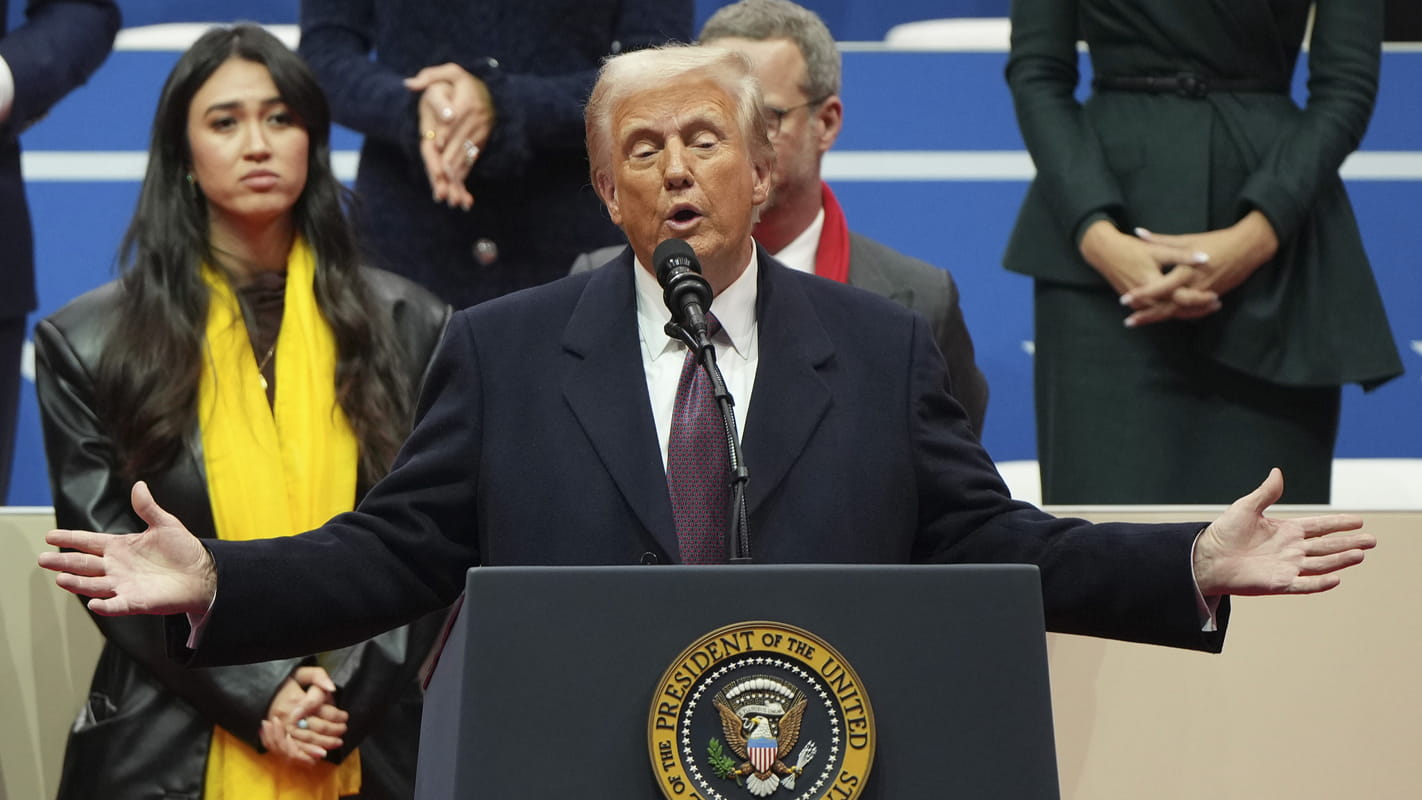
The 2025 US National Security Strategy (NSS) and 2026 US National Defence Strategy (NDS) reconceptualised the American foreign policy and grand strategy. According to the documents, America’s engagement with the world will be based on national interests, industrial capacity, and strategic competition. It emphasises industrial revitalisation, securing supply chains, and prioritising frontier technologies (AI, semiconductors, quantum and space) as core components of national power, elevating them from economic sectors to strategic domains of competition
The strategy does not portray a retreat, but it signifies a reordering of priorities: homeland security, technological leadership, and control over strategic value chains are now the lens through which external engagement is assessed, with alliances expected to be more transactional and conditional. This approach reflects a shift from liberal internationalism to economic nationalism buttressed by realism.
The NSS suggests that the US must control the resources and maintain preponderance with in the Western Hemisphere to limit non-hemispheric competitors’ foothold, especially China. In the Indo-Pacific, US focus remains on denial and deterrence capabilities, alliances with Japan, Taiwan, the Philippines and others, and pressure on partners to reduce dependencies on China, reinforcing patterns of strategic bifurcation rather than integration.
The fallout of this would be that China will deepen its influence in its neighbourhood, leveraging economic linkage and proximity to shape regional alignments, while deterrence and burden-sharing constraints limit Washington’s primacy in Asia. This would heighten the probability of flashpoint tensions in the South China Sea and East China Sea as China tests deterrent thresholds and seeks decisive positional advantages.
Notably, China will not be a replacement for the US as its appetite for interference in other countries’ affairs is non-existent, like Venezuela, “an all-weather partner.” But the story will be different in Asia.
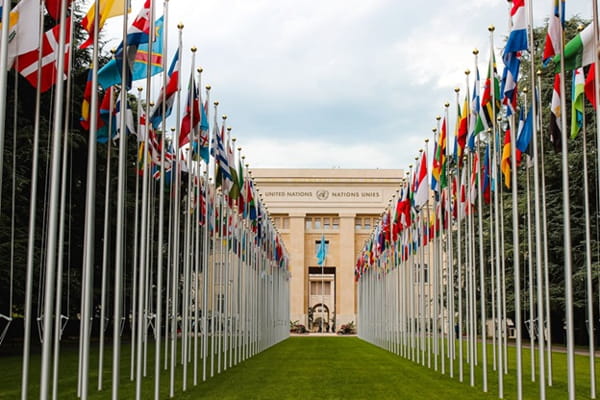
United Nations.
“Asia for Asians” and the New Meaning of Power
China’s long-term interest is to gain regional hegemony, combining economic interdependence with deepening security capabilities, effectively pushing the U.S. out. With these new developments, are we moving towards an age of Chinese dominance in Asia? Are we moving towards Asia for Asians?
Xi Jinping advanced this idea in 2014 as a major diplomatic initiative for a China-centric regional order. The idea was that Asians should manage Asian affairs, solve Asian problems, and ensure Asian security without reliance on outside powers (the US) and alliances with them. It was precisely to counter the U.S. influence, seen as restricting the ‘China rise.’ Now that the Western Hemisphere has become the primary focus for the U.S., does that mean that China can fulfil its own geopolitical agenda? Not today, but perhaps soon.
Simultaneously, economic segmentation, exemplified by the “China+1” model and supply-chain diversification, will be the norm. Yet rather than reducing interdependence, this fragmentation will deepen dependencies, contributing to coercive leverage and strategic vulnerability, particularly for Asian nations, already deeply embedded in China-centric production and market networks, only amplified by the Trump administration’s trade war and tariffs.
China has taken note of changing priorities in the US strategy and policy towards Beijing. China sees the US retreating from the “great power competition” framework to homeland defence under the “America First” model. The tone of new strategies was seen as more conciliatory, referring to China as the “second most powerful country,” situating China as a “near-peer” competitor, viewing it as a core economic challenge rather than a military threat compared to the 2022 or 2017 NSS.
However, the US remains committed to protecting its trade routes and lanes of communication, a posture that inevitably collides with Chinese interests in the region. But Beijing is likely to leverage this moment of instability to consolidate regional influence, where its economic weight will increasingly translate into geopolitical advantage. Asian states will face a narrowing set of choices: to hedge or to bandwagon.
At the same time, the region is experiencing an accelerated military buildup, mostly asymmetric, targeting China; there is an opportunity for collective defence mechanisms. Asia-Oceania military spending reached USD 629 billion in 2024, up 6.3 per cent from 2023, with China’s at USD 314 billion. In the absence of direct US intervention in a conflict with China, countries like Japan, India, Taiwan and the Philippines will be compelled to advance collective and minilateral security cooperations to preserve some semblance of rules-based order and regional stability without surrendering strategic autonomy or compromising core national interests.
The problem with this transition period is that every middle or small Asian country will be vying for a better, more favourable position to build capacity and secure long-term interests, a goal impossible without access to Chinese markets, capital and manufacturing ecosystem. The international system is thus relearning what power means, as the new world order emerging is resource-centric.
The defining arena of this era is technology governance and economic architecture. Frontier technologies like AI, semiconductors, and quantum will become a hegemonic sub-challenge, where standards, infrastructure, and ecosystems determine geopolitical leverage. TSMC’s (Taiwan Semiconductor Manufacturing Company) foundry share was 66 per cent in 2025, underscoring the importance of Taiwan as a leverage in the US-China competition, placing Taiwan as a high-value partner for the US.
The flash points, like Ukraine, Taiwan and the South China Sea, will continue to serve as strategic pressure points. In fact, it will be these flash points which will become the precursors of a changing global posture. The US will resort to being an offshore balancer, seeking to preserve core interests via regional proxies and deterrence rather than direct global primacy.
India’s Strategic Choices in a Contested Order
What can India do? India cannot opt out of this competition. The best tools that India has are strategic autonomy grounded in diversified partnerships and resilient capabilities.
● Trade and tech hedging: balancing the relationship with multiple poles while building indigenous capacity.
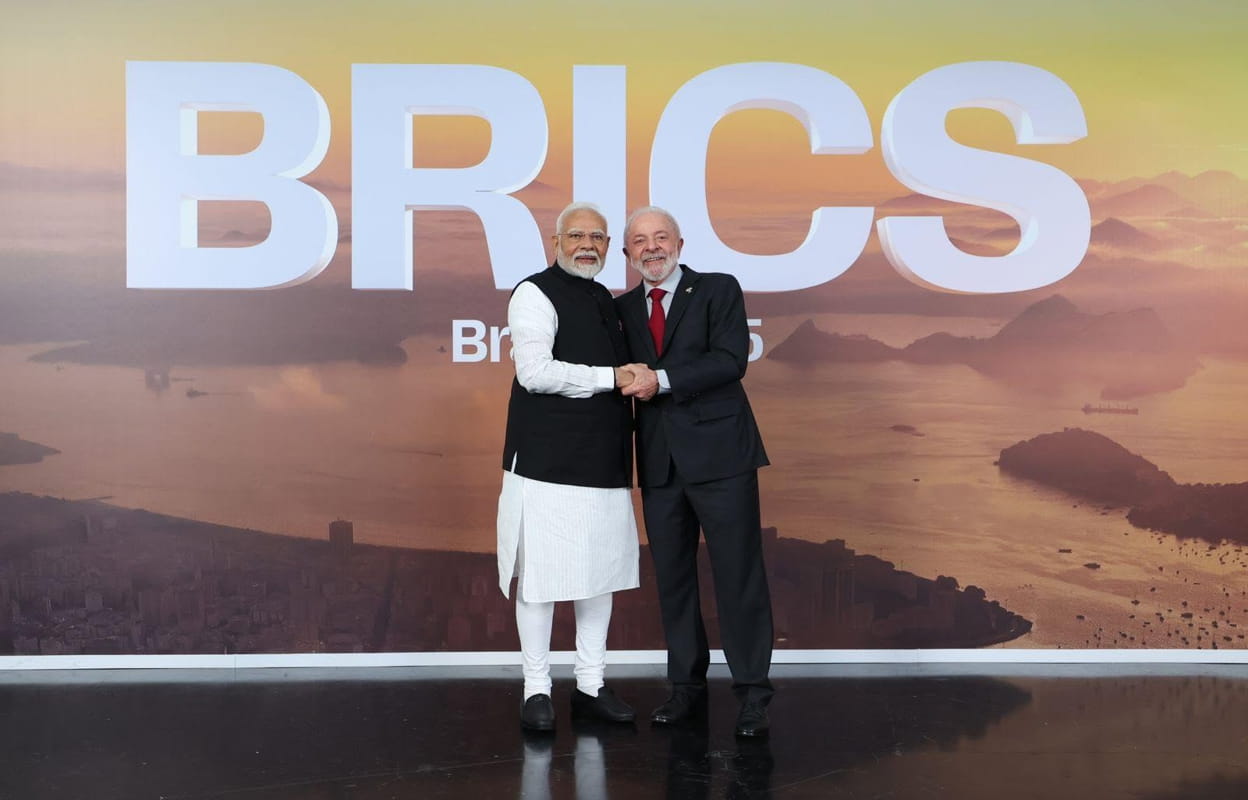
● Institute shaping: leveraging multilateral forums (e.g., expanded BRICS, digital governance coalitions) to shape inclusive norms.
● Security frameworks: partnerships to address regional security.
● Industrial and regulatory competence:deepening industrial capacity, tech absorption, and governance agility, because autonomy without capacity is an illusion.
Contestation, Not Consensus
The new global order is emerging as a fractured, negotiated, and contested space. Power will not be centralised, but constantly negotiated. Middle powers can play decisive roles by bridging domains, shaping standards, and leveraging positions in supply chains.
Transition does not mean collapse but competition without comfortable certainties. In such a world, the logic is contestation, not consensus and strategic adaptation, not nostalgia for the old order. (This is the first part of a two-part series on the topic.)
(Exclusive to NatStrat)
Separating Reality from the Rhetoric: Facts, Fiction, and the Indus Waters Treaty
Hedging Without Punishment: Vietnam, India, and the Unequal Burden of Strategic Autonomy